
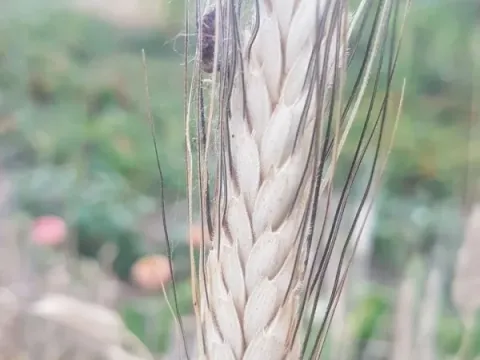
Timopheevi wheat
Triticum timopheevi
Timopheevi wheat, a tetraploid species, requires traditional agronomic practices similar to other spring cereals for successful establishment and development.
What the section contains
Timopheevi wheat
Sowing should take place in early spring as soon as the soil reaches a workable condition, allowing the plants to establish a deep root system before the onset of summer heat.
It is essential to ensure uniform planting depth, usually around 4 to 6 centimeters, to achieve consistent emergence and avoid premature drying of the soil surface.
Seeding rates should be adjusted based on the specific variety and regional conditions to allow for optimal spacing, as this species demonstrates strong tillering potential.
Proper seedbed preparation is critical, as the hull-covered seeds require adequate soil contact to facilitate uniform germination and early vegetative growth.
Originating from the Caucasus region, Timopheevi wheat is highly adapted to extreme mountain climates, showing excellent cold tolerance and drought resistance.
The crop is known for its ability to thrive in marginal soils and low-fertility environments where modern soft wheat varieties often fail to produce a viable yield.
It prefers well-drained soil conditions and does not perform well in waterlogged or heavy clay areas that can restrict root respiration and lead to crop stress.
While robust, the crop responds positively to balanced nutrient management, particularly during the critical stages of stem elongation and heading.
The environmental versatility of this species makes it a subject of great interest for climate-resilient agriculture and sustainable food production systems.
Yield levels of Timopheevi wheat are generally lower than modern commercial wheat, yet the quality of the harvested grain remains highly valued for dietary purposes.
The grain is encased in tough glumes, which protects it during development but complicates the mechanical threshing process at the end of the season.
Despite lower volume yields, the stability of production in challenging climatic years provides a degree of reliability that modern high-yield varieties often lack.
Thousand-kernel weight is relatively stable, reflecting the plant's efficient mobilization of resources to the grain, even under limited environmental inputs.
Agricultural use focuses on niche markets, such as specialty flours and heritage grains, which cater to consumers seeking traditional and healthy wheat products.
The most significant advantage of Triticum timopheevi is its exceptional natural resistance to a wide range of major fungal diseases, including stem rust, leaf rust, and powdery mildew.
This genetic resistance makes it a vital resource for plant breeders working to introduce resilient traits into commercial wheat cultivars through hybridization.
Insect pests such as cereal leaf beetles or aphids can affect the crop, necessitating periodic field inspections to prevent significant damage during the growing cycle.
The morphological structure of the wheat, including its dense awns and tough hull, provides a physical barrier that discourages certain types of insect feeding.
Good agricultural practices, such as maintaining appropriate crop rotations, are sufficient to keep the pressure from common wheat pests and soil pathogens at bay.
Harvesting Timopheevi wheat requires careful timing, as the brittle nature of the rachis can lead to grain shattering if the crop remains in the field too long past maturity.
Combining equipment must be precisely adjusted to ensure the removal of the hull while maintaining the integrity of the grain, as improper settings can lead to significant kernel cracking.
Post-harvest handling is critical; drying the grain to safe moisture levels immediately after harvest prevents mold development and preserves the nutrient content.
Due to the hull-covered nature of the grain, specialized de-hulling equipment is often required before the grain can be processed into flour or other food products.
Storage should be conducted in clean, dry, and rodent-proof facilities to ensure the long-term viability and high quality of the harvested produce.