
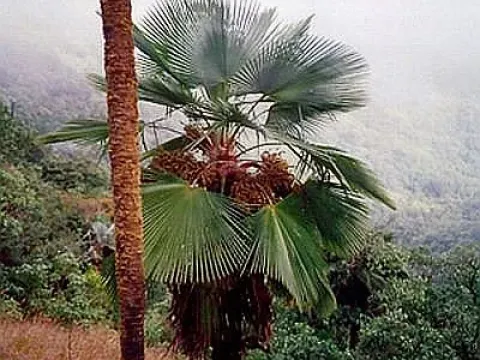
Trachys
Trachys
Sowing of Trachys should occur when the soil has sufficiently warmed up, ensuring that the risk of frost is completely eliminated in the region of cultivation.
What the section contains
Trachys
Seeds are typically sown at a shallow depth of 1 to 2 centimeters to ensure rapid germination and emergence in warm, moist seedbeds.
Proper spacing between rows is essential to facilitate air circulation, which helps reduce the risk of diseases commonly associated with dense stands.
For optimal results, growers often use precision drills that ensure uniform distribution of seeds, which is crucial for maximizing biomass production.
Post-sowing soil compaction is often recommended to improve the contact between the seed and soil particles, thereby promoting capillary water movement.
Trachys is a genus of grasses belonging to the Poaceae family, characterized by its adaptability to various tropical and subtropical environmental conditions.
The plant thrives best in well-drained, fertile soils, such as sandy loams, which prevent waterlogging and allow for deep root system development.
Soil pH levels should be maintained in the range of 5.5 to 7.0, as extreme acidity or alkalinity can inhibit the uptake of essential micronutrients.
Sunlight exposure is a primary requirement for the healthy growth of Trachys; the crop performs poorly in shaded areas and requires full sun for optimal photosynthesis.
Consistent moisture availability during the vegetative growth phase is necessary to achieve high yields, especially when the crop is grown for forage production.
Yield potential is highly dependent on the quality of soil management and the timing of irrigation during the peak development phases of the plant.
Regular fertilization with balanced NPK ratios significantly boosts dry matter production, which is the main metric for evaluating the success of the crop.
Harvesting at the correct growth stage ensures a balance between biomass quantity and the nutritional quality of the forage provided to livestock.
Average yields can vary widely based on the specific species and the regional climatic conditions, requiring localized field trials for accurate estimation.
Strategic management practices, including pest control and weed suppression, are essential to maintain stable yields throughout the entire harvest season.
Fungal pathogens such as rusts and leaf spots remain the primary concern for Trachys growers, particularly in humid climates with poor drainage.
Insect pests that target the stems or roots can cause significant economic losses if not managed during the early stages of plant growth.
Weed competition is particularly aggressive in the early seedling stage, necessitating timely mechanical or chemical control measures to ensure plant dominance.
Environmental stress, such as extreme heat or prolonged drought, can make the crop more susceptible to secondary infections and infestations.
Implementing an integrated pest management program, including rotation with non-host crops, is the most effective strategy to mitigate these biological threats.
The harvesting of Trachys for forage is typically timed just before the plant enters the full reproductive stage to ensure maximum nutrient concentration.
Mechanical harvesting using mowers or cutters should be performed when the moisture content of the soil allows heavy machinery access without damaging the fields.
Once cut, the biomass is often left to wilt or dry in the field if it is intended for hay production, requiring stable weather conditions to prevent spoilage.
Adjusting the height of the mower blades is crucial to allow for potential regrowth, provided the species is managed as a perennial or ratoon crop.
Post-harvest storage must focus on keeping the harvested material dry and protected from pests to maintain the shelf life and nutritional integrity of the product.