
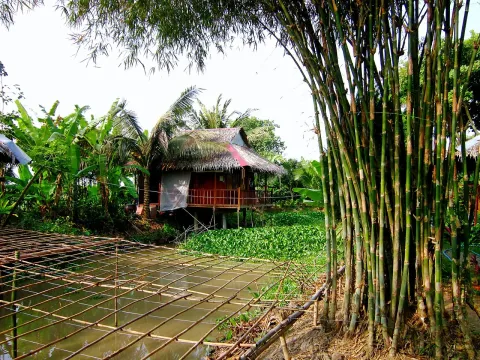
Thyrsostachys
Thyrsostachys
Thyrsostachys is a genus of tropical clumping bamboos belonging to the grass family Poaceae. These perennial plants are native to Southeast Asia, forming dense clusters that are highly valued for their structural stability and elegant appearance.
What the section contains


Thyrsostachys
The culture thrives in tropical climates characterized by high temperatures and distinct wet seasons. It requires significant warmth throughout the growth cycle and is sensitive to frost, which limits its commercial cultivation to frost-free tropical and subtropical zones.
Regarding soil requirements, Thyrsostachys prefers deep, well-drained loamy soils. It cannot tolerate waterlogged conditions, which can lead to root rot and eventual plant decline, so proper site drainage is essential for plantation health.
Light intensity plays a crucial role in the development of the culms. Full sun exposure is recommended for optimal growth rates, although young plants may benefit from partial shade during the initial establishment phase of the plantation.
Agricultural management requires regular monitoring of the clump density. Proper thinning is necessary to ensure adequate air circulation and light penetration, which are vital for maintaining the vigor of individual culms and preventing disease outbreaks.
The primary economic use of Thyrsostachys, especially the species Thyrsostachys siamensis, is in the construction and furniture industries. Its culms are known for their high strength, flexibility, and resistance to splitting, making them ideal for structural applications.
The edible shoots of certain species represent a significant food resource. When harvested at the right growth stage and prepared correctly, these shoots are a popular ingredient in many regional cuisines, providing a steady secondary income for farmers.
In addition to timber and food, the plant is extensively used in landscape design. Its clumping habit makes it an excellent choice for ornamental screens and hedges that provide privacy and noise reduction in urban and rural environments.
Industrial processing involves the conversion of bamboo fiber into a variety of products, including flooring, textiles, and paper. The biomass production rate is high, allowing for consistent harvesting once the clump reaches maturity.
Harvesting techniques focus on selective extraction of mature culms rather than clear-cutting. This sustainable practice ensures the longevity of the bamboo cluster, providing a renewable source of raw material for several years from a single planting.
Plantations are susceptible to various pests, including shoot borers and bamboo aphids, which can stunt development if left unchecked. Integrated pest management strategies, emphasizing biological controls, are preferred to minimize chemical use.
Fungal pathogens causing leaf spots and culm rot are common in dense, poorly ventilated clumps. Preventive maintenance, such as removing debris and thinning overcrowded stems, is the most effective way to manage these risks.
Root system pests, particularly soil-borne nematodes, can pose a hidden threat to plantation productivity. Soil testing and the use of resistant varieties or organic soil amendments can help mitigate these biological pressures.
Physical damage to the culms during harvesting can serve as an entry point for secondary infections. Ensuring that cutting tools are sharp and sanitized helps prevent the spread of diseases within the plantation.
Monitoring for invasive weeds is also essential during the early stages of establishment, as competition for nutrients and water can significantly slow down the growth rate of young Thyrsostachys stands.