
Tor-grass
Brachypodium rupestre
Description
Sowing dates
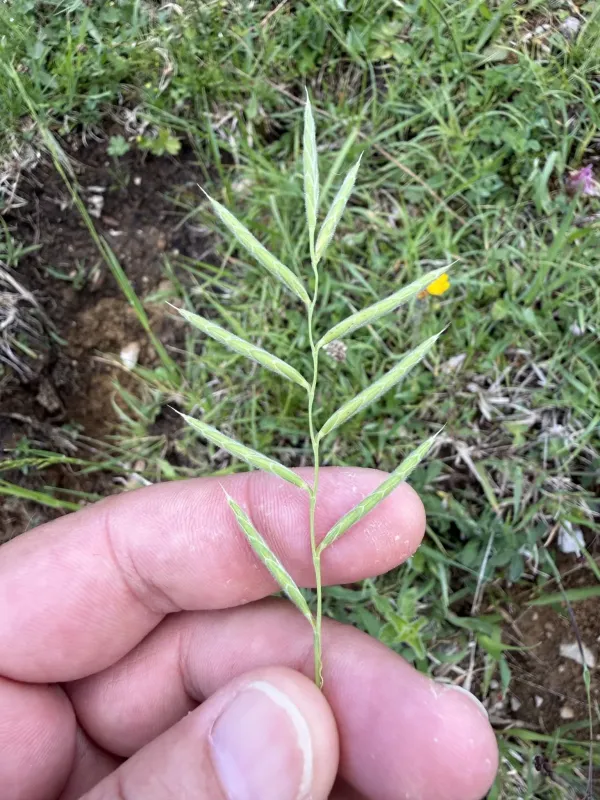
Tor-grass (Brachypodium rupestre) is a perennial grass species belonging to the Poaceae family, valued for its hardiness and ability to thrive in diverse meadow environments.
The optimal sowing time is during early spring or late summer, allowing the seeds to establish a strong root system before the onset of extreme temperatures.
Successful establishment requires a well-prepared seedbed, with shallow sowing depths of 1–2 cm to ensure that the delicate seedlings do not struggle to emerge through the soil profile.
Rolling the soil after planting is a recommended practice to improve soil-to-seed contact, which is essential for uniform germination in varied field conditions.
Since the species has a relatively slow initial growth rate, early weed management is critical to prevent competitors from shading out the young grass stands.
Growing requirements
This grass is highly adaptable, preferring well-drained, calcareous soils where its deep root system can effectively access soil moisture during drier spells.
It exhibits a strong tolerance for drought, making it an excellent candidate for stabilizing slopes and managing landscapes with poorer, rocky soil composition.
Tor-grass thrives in sunny, open areas, which ensures maximum biomass accumulation and promotes the development of nutrient-dense forage quality.
The species is remarkably winter-hardy, allowing it to withstand severe frost and snow cover, making it a reliable perennial option for temperate farming regions.
Although it tolerates a range of soil pH, it performs best in neutral to slightly alkaline soils; acidity can limit root development and overall productivity.
Yield
Productivity levels vary depending on soil fertility and management practices, with yield potentials reaching significant levels under appropriate fertilization and grazing rotation.
The grass is known for its persistence and ability to form dense sod, which contributes to long-term forage availability in permanent pastures and meadow systems.
It maintains good nutritional value during its vegetative phase, making it a suitable choice for cattle and sheep grazing throughout the primary growing season.
When used in pasture mixes, it contributes to soil health through its extensive root network, which enhances soil structure and prevents erosion on sloped land.
- High persistence in managed systems
- Excellent tolerance to grazing pressure
- Good nutritional profile for ruminants
- Resilient against soil compaction
Main diseases and pests
Common agricultural threats include rust and fungal leaf spots, which may emerge during periods of high humidity and poor air circulation within the stand.
Pest pressures from cereal aphids and various stem-boring insects can potentially impact seed production and early plant development if not properly managed.
Effective management strategies focus on preventing overcrowding of the stands, which allows for better airflow and reduces the risk of moisture-related fungal infections.
Integrated pest management, including balanced fertilizer application and appropriate stocking rates, helps maintain healthy, resistant plant populations.
Monitoring the fields during the vegetative peak is crucial to identify and mitigate pest outbreaks before they lead to significant economic yield losses.
Harvesting
For high-quality hay, harvesting should occur during the booting or early heading stage, when the nutrient concentration in the leaves is at its peak for animal consumption.
Maintaining a stubble height of 6–8 cm during mowing is essential to protect the plant's crown, enabling fast regrowth and preventing long-term stand exhaustion.
Grazing management should focus on rotation to allow sufficient recovery time, ensuring the plants regain energy stores in their root systems between grazing cycles.
Seed harvesting should be planned when the inflorescences transition to a brownish hue, ensuring that grain moisture is low to prevent post-harvest heating.
Proper storage of harvested seeds in cool, dry silos maintains germination viability, ensuring high-quality plant material for future agricultural cycles.