
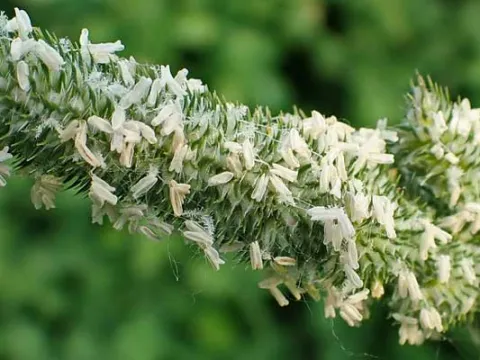
Timothy grass
Phleum pratensis
Timothy grass (Phleum pratense) belongs to the Poaceae family and is a highly valued forage crop. Seeds are typically sown in early spring or late autumn into moist, prepared soil.
What the section contains
Timothy grass
The optimal sowing depth is 1–2 cm, as the seeds are very small and require firm contact with the soil. When undersown with legumes like clover, it is planted simultaneously with the cover crop.
Seeding rates vary depending on regional climate and sowing method, generally ranging from 10 to 14 kg per hectare for pure stands. In seed mixtures, the rate is adjusted accordingly.
Proper soil leveling and consolidation before planting are crucial to ensure uniform germination and robust early development of the grass.
Seedlings develop slowly during the first year, making effective weed control and consistent moisture essential during the early stages of plant growth.
This species is a mesophyte, demanding high soil moisture levels but unable to withstand prolonged waterlogging or standing surface water.
Timothy grass is renowned for its exceptional winter hardiness, allowing it to thrive in the harsh conditions of northern and temperate regions.
It performs best on fertile loamy and clay soils and responds positively to nitrogen fertilization, which significantly promotes vegetative regrowth.
The grass performs poorly on dry, sandy soils or in areas with high acidity, requiring lime treatment on soil types with low pH levels.
Ideal conditions for growth include moderate temperatures and a consistent distribution of rainfall throughout the entire growing season.
Average hay yields under optimal conditions range from 4 to 8 tonnes per hectare, depending on the intensity of nutrient management and fertilization.
With proper management, the crop can provide two full cuts per season while maintaining a high nutritional value of the harvested biomass.
Maximum productivity is typically observed in the second and third years of life, after which yields may decline without regular fertilizer applications.
Seed production varies by climate, averaging 300–600 kg per hectare, making it a viable and profitable option for specialized seed producers.
Maintaining a precise mowing schedule is vital, as allowing the stand to over-mature will significantly decrease the protein content of the forage.
Common diseases affecting this crop include rust, which targets foliage during periods of high humidity and significantly degrades hay quality.
Leaf spot diseases, such as helminthosporium and septoria, are frequently encountered when agronomic standards are ignored or stands are overly dense.
Various insect pests, including meadow moths and several species of cereal flies, can cause substantial damage to both young seedlings and seed crops.
To control pest and pathogen populations, preventive application of fungicides and insecticides is recommended during critical growth stages.
Implementing proper crop rotation and timely harvesting helps to mitigate the risk of epiphytotics and damage from parasitic organisms.
The optimal time for hay harvesting is the early flowering stage, as this is when the plant offers the peak nutritional value and best palatability.
Cutting should be performed in dry weather, ensuring proper wilting of the cut mass to minimize the loss of essential nutrients.
For seed production, harvest commences when the lower portions of the inflorescences turn brown, preventing excessive shattering of the tiny seeds.
Modern harvesting technology often utilizes crimpers to accelerate the drying process while preserving the biological value of the green mass.
Post-harvest processing requires mandatory cleaning and drying of seeds to a moisture level of no more than 13–14% for safe long-term storage.