
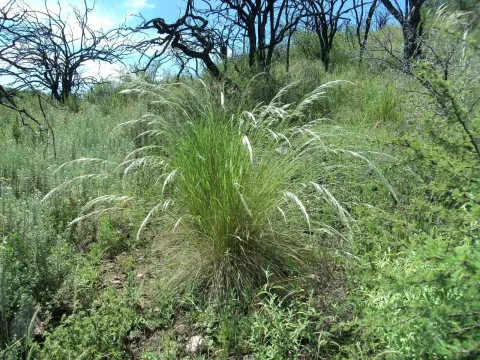
Stipa pseudoichu
Stipa pseudoichu
Stipa pseudoichu is a perennial grass belonging to the Poaceae family, known for its resilience and architectural beauty. This species is native to the Andean highlands, where it thrives in harsh, high-altitude environments characterized by cold nights and intense solar radiation.
What the section contains
Stipa pseudoichu
The plant exhibits a bunch-grass growth habit, characterized by long, slender, and rigid leaves. Its biological adaptations allow it to conserve water efficiently, making it highly drought-tolerant once established in a suitable substrate.
Optimal growing conditions involve gritty, well-draining soils with minimal organic matter. It prefers positions with full sun exposure, which is crucial for the development of its feathery inflorescences that appear during the warmer months of the year.
In terms of agricultural management, Stipa pseudoichu requires very little fertilization. Excessive nutrients can cause weak, floppy growth, which diminishes the plant's characteristic upright, elegant appearance and structural integrity.
The main agricultural and landscape utility of this species lies in xeriscaping and soil stabilization. Its deep and expansive root system makes it an excellent choice for preventing soil erosion on sloping terrains and dry embankments.
The primary threat to the vitality of Stipa pseudoichu is poorly draining soil. When roots are saturated for extended periods, the plant becomes highly susceptible to fungal rot and crown decay, which are often fatal.
Soil-dwelling insects, such as larvae of various beetles, may pose a risk to the root system, especially in nurseries or during the plant's establishment phase. Regular inspections are recommended for early detection of underground activity.
Foliar diseases, such as rusts, can occur in stagnant air conditions or during periods of unusually high humidity. Proper spacing between individual plants is necessary to promote adequate air circulation and reduce disease pressure.
Weed competition is a significant challenge during the initial growth cycle of the grass. Because it establishes slowly, the plant is vulnerable to being outcompeted by invasive weeds that consume available soil resources.
Pests such as aphids or spider mites can occasionally affect the plant in controlled environments like greenhouses. However, in open field conditions, it typically displays robust resistance to most common agricultural pathogens.