
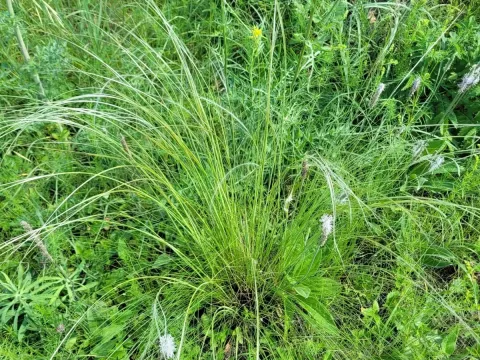
Stipa tirsa
Stipa tirsa
Stipa tirsa, commonly known as a type of feather grass, belongs to the Poaceae family. It is a perennial herbaceous plant that grows in dense tufts and is native to the steppe and forest-steppe regions of Eurasia.
What the section contains
Stipa tirsa
The plant thrives in well-drained, fertile chernozem soils with a neutral or slightly alkaline pH. It possesses remarkable drought tolerance and winter hardiness, allowing it to adapt to harsh continental climates with limited moisture.
Optimum growth requires open, sun-exposed sites. The plant does not tolerate waterlogged conditions, making it unsuitable for areas with poor drainage or high water tables where root rot could easily develop.
Its agricultural value is primarily linked to its deep, fibrous root system, which helps stabilize soil against erosion. This makes it an excellent candidate for land reclamation and soil conservation projects in arid regions.
Beyond ecological restoration, Stipa tirsa is valued in landscape gardening for its aesthetic appearance, contributing to the creation of naturalistic steppe-style habitats in botanical and private gardens.
Stipa tirsa is generally resilient to most plant diseases. However, in poorly managed environments, it may become susceptible to fungal infections such as rusts, which often appear during periods of high humidity and poor air circulation.
Pests such as cereal flies and larvae of soil-dwelling beetles can cause significant damage to the roots or young shoots, potentially undermining the plant's health and reducing the overall density of the grass stands.
Overgrazing poses a major threat, as the plant cannot withstand frequent mechanical stress, leading to the rapid depletion of the stand and loss of biodiversity in areas where it serves as a primary cover.
Uncontrolled wildfires in steppe zones significantly impact the population, as they destroy the standing crop and reproductive potential, making it difficult for the plant to recover in subsequent seasons.
Effective management strategies should focus on moderate grazing pressure and the prevention of seasonal burning to maintain a healthy and vigorous grass population throughout the year.