
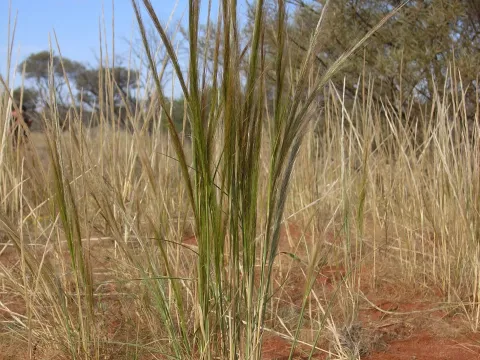
Stipa nitida
Stipa nitida
Stipa nitida, commonly known as shiny needle grass, is a perennial plant belonging to the Poaceae family. It is a characteristic species of arid and semi-arid steppe environments, demonstrating high resilience to harsh ecological conditions.
What the section contains
Stipa nitida
The plant is highly drought-tolerant, possessing a robust and deep-reaching root system that allows it to survive in water-scarce regions. It is well-adapted to high light intensity and thermal fluctuations typical of open grassland plains.
For successful cultivation, well-drained soil is essential. Stipa nitida prefers sandy, loamy, or stony substrates with a neutral to slightly alkaline pH level. It does not tolerate waterlogging, which can cause root rot and rapid decline of the stand.
The species has significant ecological importance, as it helps stabilize fragile soils and prevents wind erosion in semi-arid agricultural landscapes. It acts as an essential stabilizer for pasture rejuvenation programs.
Proper site selection is crucial; the chosen field must have excellent air circulation and full sun exposure throughout the day to ensure the plant reaches its full physiological potential and reproductive maturity.
The ideal time for sowing Stipa nitida is in early spring. Seeding should take place as soon as the soil is dry enough to handle, ensuring the plants can establish their roots before the peak summer heat arrives.
Seed depth should be carefully controlled during planting. Placing seeds at a depth of 1 to 2 centimeters is optimal, as deep burial will prevent emergence due to the seeds' limited energy reserves.
Utilizing precision drills for sowing ensures a uniform plant density, which is critical for maximizing biomass production and ensuring an even canopy development across the entire field.
Post-sowing maintenance requires rolling the soil surface to ensure optimal seed-to-soil contact. This step is vital for improving moisture absorption and guaranteeing uniform germination rates under field conditions.
In the initial establishment phase, weed control is the primary management concern. Growers should implement mechanical cultivation between rows if the sowing pattern allows, helping to protect young plants from competition.