
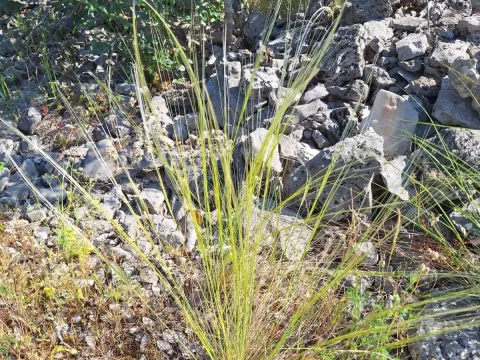
Stipa eriocaulis
Stipa eriocaulis
Stipa eriocaulis, a member of the Poaceae family, is a perennial grass species primarily found in steppe and semi-desert environments. It is known for its extreme resilience in harsh habitats.
What the section contains
Stipa eriocaulis
Sowing should ideally occur in early spring, allowing the seeds to utilize soil moisture before the onset of summer drought. Autumn sowing is also viable in regions with mild winters.
Soil preparation requires fine tilth to ensure good contact for the small seeds. Depth should be shallow, typically 1–2 cm, as deep burial significantly reduces germination rates.
In the first year, growth is slow as the plant invests energy into its root system. Weed control during this establishment phase is critical for the survival of the seedlings.
Due to the species' specialized nature, it is often sown in mixtures with other drought-resistant grasses to create stable, long-term pasture or ecological restoration sites.
Stipa eriocaulis is a true xerophyte, perfectly adapted to hot and arid climates. It can survive extended periods without precipitation that would destroy standard forage crops.
The plant thrives in well-aerated, dry, and poor soils, including rocky or sandy substrates. It shows poor performance in heavy clay or waterlogged areas, which can lead to root decay.
Full sun is an absolute requirement for this species. Any form of shading or competition from taller, invasive weeds will result in poor development and eventual mortality of the plant.
The species exhibits a remarkable tolerance to saline soil conditions, making it an excellent candidate for reclaiming degraded lands in arid regions where other species fail.
It possesses excellent cold hardiness, allowing it to withstand severe continental winters without the need for additional protection, provided the drainage is adequate.
The biomass yield of Stipa eriocaulis is relatively low, reflecting its evolutionary adaptation to nutrient-poor environments. It is not intended for intensive high-yield forage production.
Its primary agricultural value lies in its role as a stable forage source for sheep and cattle during early spring and late autumn, before and after the peak growth of other grasses.
Yields vary significantly based on precipitation, typically ranging from 0.5 to 1.5 tons of hay per hectare. Intensifying production through irrigation is generally not recommended.
Seed harvesting is challenging due to asynchronous ripening. Careful timing is required to prevent significant losses to wind dispersal and premature shedding of the seeds.
Integrated management with legumes can improve the overall nitrogen status of the soil, potentially boosting the growth of the grass component in permanent grazing pastures.
Stipa eriocaulis is generally resistant to most common crop diseases, though fungal issues such as powdery mildew can occur during prolonged humid or overcast weather.
Key pests include wireworms, which target the root system of young plants, and various species of shoot flies that can affect established stems during the early growth stage.
The primary concern during grazing is the potential for physical injury caused by sharp awns when the plant reaches maturity and begins to dry out.
- Regular monitoring for pest outbreaks during the spring.
- Avoiding excessive nitrogen fertilization to prevent lodging.
- Managing livestock grazing times to prevent oral injury from mature seeds.
Hay harvesting should take place before the onset of full maturity, specifically during the heading phase, to ensure the nutritional quality of the forage is at its peak.
When harvesting seeds, combine harvesters must be adjusted to low drum speeds to avoid damaging the delicate awns, which are essential for the seed's self-planting mechanism.
Post-harvest, seeds must be dried to 12–14% moisture content. Storage in a dry, ventilated area is necessary to maintain long-term seed viability.
Post-harvest stubble should remain in the field to assist with snow retention and to protect the soil from wind erosion during the dormant season.
Overgrazing after the harvest must be avoided, as the plant needs to build up reserves in its crown to survive the coming winter and recover in the following spring.