
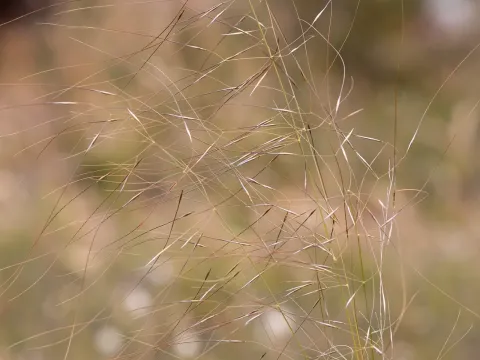
Stipa falcata
Stipa falcata
Stipa falcata is a perennial grass belonging to the Poaceae family. Sowing is typically performed in early spring, allowing the seeds to benefit from soil moisture and moderate temperatures necessary for successful germination.
What the section contains
Stipa falcata
The seeds should be sown at a shallow depth, usually not exceeding 2 centimeters. Proper seedbed preparation, including loosening the soil and clearing surface debris, is essential for achieving a uniform stand.
The seeding rate is approximately 10 to 12 kilograms per hectare, depending on seed quality. Using high-energy, certified seeds is recommended to ensure robust establishment in the field.
Initial growth is slow, as the plant invests significant energy into developing its root system. During this phase, it is crucial to protect the seedlings from competitive pressure exerted by faster-growing weeds.
Regular monitoring after emergence is advised to ensure that the stand density remains optimal, providing a solid foundation for a long-term, productive crop.
Stipa falcata is highly drought-tolerant and thrives in semi-arid and steppe environments. Its specialized physiology allows it to withstand significant periods without rain, making it an excellent candidate for marginal lands.
The plant prefers well-drained, sandy, or light loamy soils. It is sensitive to waterlogging, so selecting fields with efficient drainage is mandatory for plant health and longevity.
Being a heliophilous species, it requires direct exposure to sunlight. Shading from trees, structures, or overly tall surrounding vegetation can significantly inhibit its growth and productivity.
In terms of management, avoiding overgrazing is vital. A rotational grazing system helps maintain the vitality of the root system and prevents soil compaction and erosion.
Occasional application of phosphorus and potassium fertilizers can improve biomass production, though the plant is generally adapted to low-fertility conditions found in native grasslands.
The primary agricultural use of Stipa falcata is as a forage source in grazing systems. It provides reliable nutrition for livestock when other grasses are hindered by dry weather conditions.
Regrowth capacity after grazing or mowing is a significant agronomic advantage. This trait enables the grass to support sustained usage across the growing season in arid climate zones.
The forage quality remains consistent during vegetative phases, providing the necessary nutrients for herd maintenance. Management must account for the plant's development stages to maximize nutritional intake.
Beyond forage, the plant contributes to land stabilization. Its deep root system is highly effective in preventing wind erosion, which is a major concern in steppe-like terrains.
Yield stability is maintained by balancing grazing pressure, ensuring that the plant population is not exhausted and can provide sustainable returns over several years.
Stipa falcata is generally resistant to many common cereal diseases, but it may become susceptible to rust fungi under prolonged humid conditions or poor airflow.
Pests such as cereal flies may affect stem development. Integrated pest management strategies, focusing on habitat maintenance rather than chemical intervention, are preferred for grazing areas.
Preventative measures, such as maintaining optimal plant density and avoiding excess moisture in the field, are the most effective ways to mitigate disease risks.
Monitoring for parasitic plants is also important, as they can weaken the host grass and reduce its competitive strength against weeds within the field.
Proactive crop scouting throughout the season allows for the early detection of any physiological or pathological issues, ensuring that interventions remain minimal and targeted.