
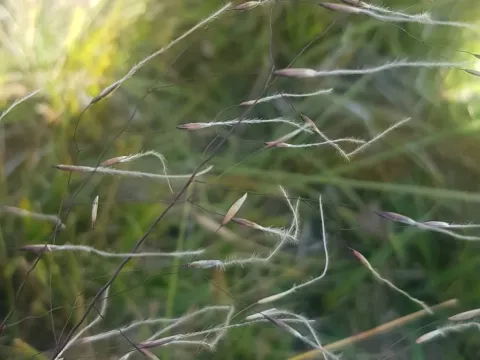
Mongolian Stipa
Stipa mongholica
Mongolian Stipa is a perennial herbaceous plant belonging to the Poaceae family. In its natural habitat, seeds reach maturity by mid-summer, ensuring natural reseeding within steppe ecosystems.
What the section contains
Mongolian Stipa
When cultivating this species, seeding is recommended in early spring when the soil has sufficient moisture. This is critical for achieving uniform emergence in arid climates characteristic of the species' native range.
The optimal seeding depth is 1 to 2 centimeters. Using specialized drills to ensure proper seed-to-soil contact is essential for capillary moisture uptake, significantly increasing germination rates in field conditions.
During the first year, the plant develops slowly, primarily forming a basal rosette of leaves and a robust root system. Intensive biomass accumulation typically occurs in the second and subsequent years.
Recommended seeding rates depend on seed purity and germination percentage, generally ranging from 5 to 8 kg per hectare using row-seeding techniques.
The culture is a classic xerophyte, well-adapted to life in sharply continental climates. It thrives in regions with cold, low-snow winters and hot, dry summers, demonstrating high frost resistance.
The plant is undemanding regarding soil fertility, though it prefers well-drained stony, gravelly, or sandy soils. It effectively utilizes resources in poor steppe soils due to its deep root architecture.
Soil pH can vary widely, but peak productivity is noted on neutral or slightly alkaline substrates. Waterlogging is highly detrimental to this culture and must be avoided at all costs.
Mongolian Stipa requires intensive sunlight. Under shaded conditions or in overly dense stands, a sharp decline in productivity and inhibition of generative development are observed.
The species possesses high wind resistance, making it an excellent choice for stabilizing eroded land and protecting light soils from wind erosion in arid zones.
The economic value of this species lies primarily in creating a high-quality pastoral base. The biomass is palatable to livestock, particularly sheep and camels, during the spring and summer seasons.
Green matter yield directly depends on rainfall during the growing season. In favorable years, the crop provides a stable supply of forage, often exceeding the output of other native steppe grasses.
Strict grazing management is essential for maintaining pasture productivity. Excessive grazing pressure leads to stand thinning and a loss of botanical diversity within the field.
Regrowth capacity is moderate, so for hay production, it is recommended to limit harvesting to a single cut during the flowering phase, ensuring maximum nutritional content.
With proper agronomic care, the productive longevity of the stand can reach 7–10 years, making it a valuable component for long-term pasture improvement in dry regions.
Major diseases include fungal infections such as grass rust, which appear during periods of high humidity. Regular aeration and the avoidance of moisture accumulation minimize infection risks.
Among pests, cereal flies and grain beetles pose the greatest threat, potentially damaging the plant's generative organs and reducing seed yield.
Under drought conditions, stands may be affected by sap-sucking insects like aphids, which extract juices from leaves, leading to deformation and reduced overall plant immunity.
To prevent massive pest outbreaks, crop rotation and spatial isolation from cereal grain crops, which can serve as reservoirs for harmful entomofauna, are highly recommended.
Chemical control is rarely utilized due to the extensive nature of cultivation; preference is given to agronomic management and maintaining a balanced agro-ecosystem.
Seed collection is performed at the stage of full maturity, when panicles acquire a characteristic straw color. It is vital to prevent over-ripening, as seeds can easily shatter during strong winds.
For hay production, mowing is conducted during the mass heading stage, when the plant contains the highest concentrations of nutrients, vitamins, and protein for livestock winter rations.
Using modern machinery with adjustable cutting heights helps minimize biomass losses. An optimal cutting height of at least 5–7 cm is required to ensure rapid regrowth.
After harvesting, the hay is dried directly in the field in windrows. Due to the high dry matter content, the drying process is efficient, minimizing the risk of crop degradation.
Storage of the harvested fodder requires protection from precipitation, as moisture accumulation in compressed bales can lead to spontaneous heating or fungal mold growth.