
Moris's fescue
Festuca morisiana
Description
Growing requirements
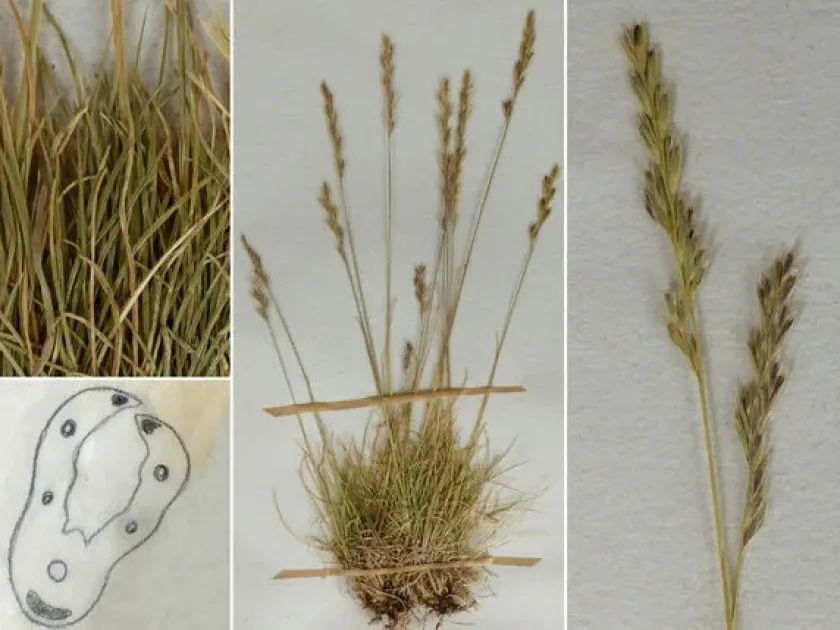
Moris's fescue (Festuca morisiana) is a perennial grass belonging to the Poaceae family. It is a distinctive botanical species primarily endemic to the island of Sardinia, where it thrives in specialized local habitats.
The plant is characterized by a dense tufted growth habit and narrow, stiff leaves that are typical for fescue species adapted to difficult conditions. Its root system is robust, allowing the plant to penetrate rocky substrates and access deeper moisture.
The species requires well-drained soils and is particularly adapted to stony or sandy substrates common in its native range. It exhibits significant tolerance to low-nutrient soils and arid conditions, making it a hardy botanical specimen.
Regarding climate requirements, Festuca morisiana prefers moderate Mediterranean conditions characterized by distinct wet and dry periods. It is highly resistant to heat stress and shows excellent resilience to intense sunlight exposure.
In agricultural practice, this grass is primarily valued for its role in pasture restoration and soil stabilization efforts. It acts as a reliable component of natural grazing lands, providing forage value in environments where soil quality is generally low.