
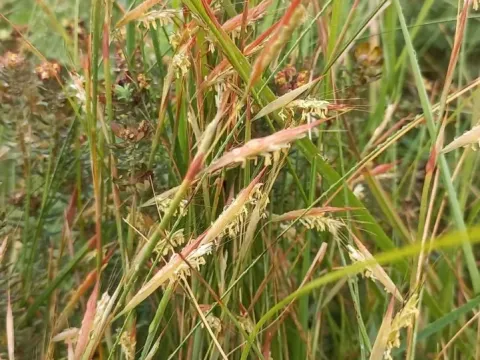
Monocymbium
Monocymbium
Monocymbium is a perennial grass belonging to the family Poaceae, widely recognized for its prevalence in the tropical and southern regions of Africa. This genus typically thrives in open grasslands and savanna ecosystems where it serves as a foundational species.
What the section contains

Monocymbium
The plant demonstrates a preference for well-drained soils, often thriving in rocky, stony, or sandy environments where other plants struggle to establish. Its ability to extract nutrients from poor-quality soils makes it a significant contributor to land conservation and erosion control.
Botanically, Monocymbium is characterized by its distinctive, often curved, boat-shaped racemes that exhibit a unique morphology. The leaf blades are generally stiff and narrow, adaptations that help the plant minimize water loss and remain resilient during prolonged periods of heat.
Regarding climate, this species is highly adapted to tropical regimes characterized by distinct wet and dry seasons. The wet season supports active leaf growth, while the dry season is essential for the plant to enter a state of dormancy and protect its root system from dehydration.
From an agricultural standpoint, Monocymbium is primarily utilized as a forage grass for livestock. Its hardiness allows it to provide essential grazing biomass in marginal environments where more sensitive agricultural crops would fail to grow or thrive.
The primary threat to Monocymbium populations is overgrazing, which depletes the plant's reserves and prevents it from completing its reproductive cycle. Excessive livestock pressure leads to soil compaction and long-term decline in plant density.
While the species is fire-adapted, frequent or poorly managed anthropogenically-induced fires can weaken the root stocks. This disruption in fire cycles often results in the loss of seeds and impedes natural regeneration of the grasslands.
Fungal diseases, particularly those affecting the foliage during high-humidity cycles, pose a significant risk to the plant's health. These infections can limit photosynthesis and reduce the overall biomass available for grazing animals.
Various insect pests, including grasshoppers and lepidopteran larvae, feed on the foliage. While the plant's structural toughness provides some level of natural resistance, large-scale outbreaks can still cause substantial damage to individual stands.
Lastly, the encroachment of invasive plant species often compromises the habitat of Monocymbium. Competition for water and light in disturbed areas forces the species to retreat, leading to fragmentation of its traditional distribution range.