
Monerma
Hainardia
Monerma, belonging to the genus Hainardia within the Poaceae family, is a specialized annual grass species. It is primarily recognized for its ability to thrive in challenging environments, particularly in saline coastal areas and degraded soils where other cereal crops fail to establish.
What the section contains

Monerma
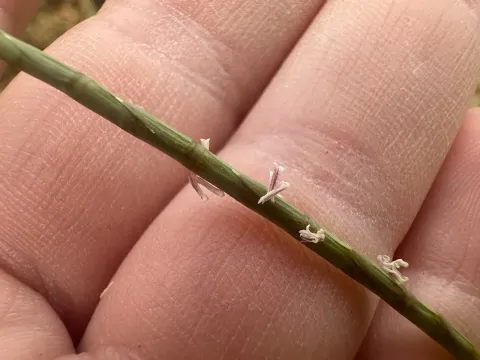
The plant exhibits unique morphological characteristics, most notably its thin, stiff culms and spikelike inflorescences that break apart into individual segments upon maturity. This biological mechanism is essential for seed dispersal in open, exposed landscapes where wind plays a significant role.
Environmental requirements for Monerma are tied to its Mediterranean origin. It requires high light intensity and is remarkably tolerant of poor, stony, or alkaline soils. While it can withstand periods of acute water scarcity, it shows optimal development when moisture is available during its initial growth stages.
Regarding soil management, the crop does not demand intensive fertilization. Its root system is efficient at nutrient scavenging in nutrient-poor substrates. However, excessive tillage is discouraged as it can disrupt the natural cycle of soil moisture retention and seed germination patterns.
хозяйственное use of Monerma is focused on its role in improving ground cover in saline rangelands. It provides critical soil stability and serves as a minor component of grazing forage, contributing to the overall ecological balance of managed pasture systems in Mediterranean climates.
Fungal infections, such as rusts and smuts, represent the most significant threat to Monerma populations. These diseases are particularly prevalent during periods of high humidity and can severely impact the vegetative output and seed viability of the stand.
Insect pests, including cereal aphids and various types of grain-feeding beetles, can cause localized damage to the crop. Infestations often coincide with rapid plant growth, leading to stunted development and reduced overall biomass if left unmanaged.
Overgrazing poses a structural threat to stands of Monerma. If grazing pressure exceeds the replenishment rate of the grass, the soil becomes exposed, leading to erosion and the potential encroachment of invasive weeds that can outcompete the native species.
Competition from more aggressive, non-native weed species is a growing concern. As agricultural landscapes shift, native grasses like Monerma often require deliberate management, such as controlled mowing or strategic grazing, to maintain their dominance in the ecosystem.
Climatic instability, specifically erratic precipitation patterns, can interfere with the critical phases of seed germination and seedling establishment. Since the plant relies on a specific biological clock, unusual seasonal weather can significantly diminish the year-over-year population density.