
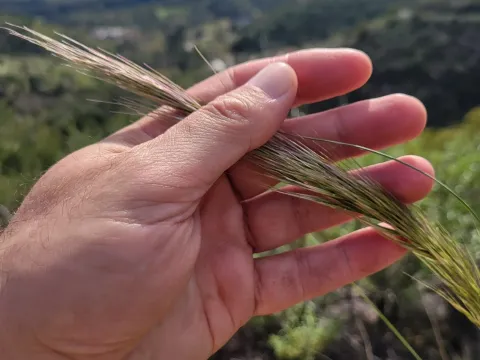
Stipa coronata
Stipa coronata
Sowing of Stipa coronata is typically carried out in early spring when the soil temperature reaches 8–10 degrees Celsius. This timing allows the plants to utilize winter moisture, which is critical for successful establishment and root development in arid environments.
What the section contains
Stipa coronata
Dormant fall seeding is also a viable option in many regions, as it allows seeds to undergo natural stratification. This method often results in better emergence during the following spring season compared to late-sown plots.
The optimal seeding depth for Stipa coronata is between 2 and 4 centimeters. It is essential to adjust this based on soil texture: deeper in sandy, loose soils to prevent desiccation, and shallower in heavier clay or loam soils to ensure easier emergence.
A seeding rate of approximately 8–12 kg per hectare is standard, depending on seed quality and the intended use of the crop. Following the seeding process, rolling the field is recommended to improve seed-to-soil contact and improve moisture retention.
Growth is relatively slow during the first year, which makes weed management a top priority. Farmers should implement inter-row cultivation or controlled mowing to protect young seedlings from competition with faster-growing weed species.
Stipa coronata belongs to the Poaceae family and is recognized as a hardy perennial bunchgrass. It is highly adapted to semi-arid climates, exhibiting exceptional tolerance to drought conditions and hot, desiccating winds common in steppes.
The crop thrives in well-drained soils, including chernozems and chestnut soils. It is highly sensitive to waterlogged conditions, as poor drainage often leads to root rot and significant stand thinning, making high-elevation or sloped sites preferable.
The preferred soil pH for this species ranges from 6.5 to 7.5. It is also quite resilient in calcareous soils, allowing it to be used successfully on degraded or eroded landscapes where other, less robust, forage species might fail.
Abundant sunlight is a fundamental requirement for the healthy development of Stipa coronata. Plots should be established in open areas without overhead shading, as low light levels significantly reduce tillering and overall reproductive performance.
Cold hardiness is a major characteristic of this species, allowing it to withstand severe winter temperatures. Its ability to go dormant during the hottest and driest parts of the season enables it to survive under extreme climatic pressure.
While not providing the high biomass volume of intensive annual grasses, Stipa coronata offers stable and reliable yields under challenging ecological conditions. The average dry biomass production ranges from 1.5 to 3 tons per hectare.
Productivity typically peaks between the second and third years of establishment. Beyond this, farmers should manage the stand density to ensure longevity, employing rotation strategies between grazing and hay production to maintain vigour.
The nutritional quality of the hay is moderate, but it is heavily dependent on the stage of harvest. Early harvesting before seed head maturation is essential to ensure higher digestibility and lower crude fiber content in the forage.
Grazing management is crucial for the long-term survival of the stand. Overgrazing can cause the population to decline; therefore, a rotational grazing system with recovery periods is recommended to allow the grass to regain its leaf area.
Seed production yields range from 200 to 400 kg per hectare in professional settings. Successful yields are highly dependent on favorable weather conditions during the flowering and pollination stages of the crop.
Stipa coronata is naturally robust against most common cereal diseases. However, in unusually wet seasons, it may be susceptible to powdery mildew or leaf rust, which can reduce the rate of photosynthesis and weaken the plant.
Insect pests, including various species of grass-feeding flies and aphids, can cause localized damage. Aphid outbreaks in dry years may require monitoring, although heavy infestation is less common than in more succulent crops.
Below-ground, wireworms and other soil-borne larvae can damage the root systems of young plants. Establishing a healthy stand early on is the best defense against root-feeding pests, often supported by proper seedbed preparation.
Integrated management practices help mitigate threats:
- Maintaining high field hygiene to prevent the spread of fungal pathogens.
- Avoiding excess nitrogen fertilization, which can attract pests and weaken cellular walls.
- Regular field monitoring to detect early signs of insect activity.
Strategic mowing can also act as a control mechanism by removing infected biomass from the field. This reduces the inoculum level for the following season and encourages fresh, healthy growth from the crown.
Hay harvesting should occur during the boot stage or the very beginning of the heading phase. This timing provides the best balance between biomass quantity and feed quality, avoiding the development of sharp awns that could harm livestock.
For seed production, a two-stage harvest method is preferred: windrowing once maturity is reached, followed by combine harvesting. This method reduces seed shattering losses, which are common if the crop remains in the field for too long.
Harvesting equipment must be properly adjusted to handle the fibrous nature of the grass. Using specialized combine settings for fine-seeded grasses ensures a clean product with minimal inclusion of stems and debris.
When used for soil conservation or ecological restoration, harvest can be omitted entirely, leaving the stubble to anchor the soil. This prevents wind erosion and helps capture winter snow, which boosts growth the following spring.
Post-harvest storage requires the seeds to be dried to a moisture content of 12–14 percent. Proper aeration in storage units is essential to maintain high germination rates over the shelf life of the seeds, which can extend for several years.