
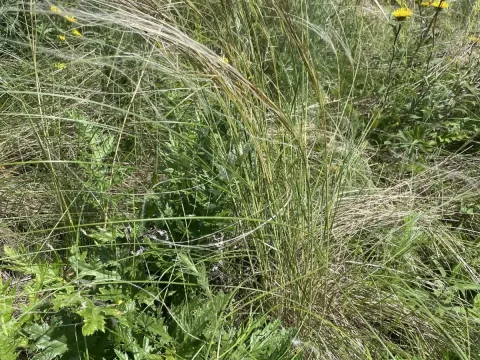
Stipa dasyphylla
Stipa dasyphylla
Sowing Stipa dasyphylla is primarily conducted during the autumn period, allowing the seeds to undergo natural stratification during the winter months, which enhances germination rates.
What the section contains
Stipa dasyphylla
If spring sowing is required, it must be performed as early as possible while the soil remains moist to ensure that the seedlings establish successfully before the heat of summer.
The planting depth should be strictly controlled at 1 to 2 centimeters. Because the seeds are small, deeper sowing significantly reduces the rate of emergence.
Soil preparation is critical; the seedbed must be firm, fine-textured, and free from competitive weeds that could smother the slow-growing seedlings of the feather grass.
Post-sowing soil compaction using rollers is recommended to ensure adequate capillary water contact between the seeds and the soil particles, which is essential for survival.
Stipa dasyphylla, a member of the Poaceae family, is a perennial grass species primarily adapted to temperate steppe climates and well-drained, nutrient-rich soils.
This species shows high drought tolerance due to its anatomical adaptations, including leaves with specific pubescence that helps in regulating water loss via transpiration.
The plant thrives in open, sunny environments. It performs poorly in shaded areas and is intolerant of waterlogged or heavy clay conditions that restrict root aeration.
Regarding soil requirements, neutral to slightly alkaline pH levels are optimal. It does not demand high fertilization rates and is adapted to low-nutrient, natural steppe soils.
In agricultural settings, it is valued for its potential in soil restoration and as a component of sustainable grazing systems in regions where it is native.
The primary fungal threats to Stipa dasyphylla include rust diseases, which typically flourish in conditions with high humidity or poor field ventilation.
Insect pests such as grain aphids can cause substantial damage to the green biomass, sucking sap and reducing the plant's ability to store energy for winter.
Soil-borne pests like wireworms can damage the roots, leading to reduced plant density, especially in newly established fields where soil integrity is not yet high.
Disease management requires diligent scouting during the vegetative stage. Maintaining optimal plant density prevents the microclimate conditions that favor pathogen development.
Integrated Pest Management (IPM) practices should be employed, focusing on crop rotation and the timing of operations to minimize the need for heavy chemical applications.