
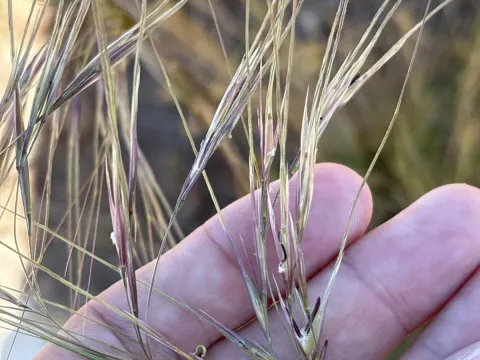
Nodding needlegrass
Stipa cernua
The sowing of nodding needlegrass in cultivation is primarily conducted in the spring, once soil temperatures reach 10–12°C. Seeds require stratification to increase germination energy, which is particularly critical for industrial propagation or establishing ornamental plantings.
What the section contains
Nodding needlegrass
For direct seeding in the ground, sites with minimal weed presence are selected, as young seedlings exhibit a slow growth rate. The planting depth should not exceed 1–2 cm, ensuring optimal oxygen access and preventing the embryo from drying out.
When using the seedling method, sowing is carried out in late winter in a light substrate. This approach allows for the development of a robust root system before transplanting to open ground, which significantly increases survival rates in climatic zones with unstable spring conditions.
Autumn sowing is also possible, which naturally fulfills the stratification requirement. However, this method is only applicable in regions with mild winters, as the freezing of moist soil can lead to the death of imbibed seeds.
Choosing the optimal time depends on the drainage properties of the site. In regions with frequent spring flooding, it is recommended to delay sowing until consistently dry weather is established to prevent seed waterlogging.
Nodding needlegrass is a typical xerophyte with high solar radiation requirements. The plant prefers open, well-lit sites where shade from other vegetation is completely excluded.
The culture is adapted to low-nutrient soils, including rocky, sandy, and loamy substrates. Excellent drainage is a vital requirement, as water stagnation in the root crown area leads to rot and the death of the perennial plant.
The plant demonstrates exceptional resilience to drought periods due to a highly developed root system that penetrates deep into the soil profile. The optimal soil pH range is from slightly acidic to neutral.
Under cultivation, nodding needlegrass does not require heavy nitrogen fertilization. An excess of nutrients leads to excessive vegetative growth at the expense of flowering and stem stability, increasing the risk of lodging.
Climatic requirements include a moderately continental regime with dry summers. Under high humidity conditions, the plant loses its ornamental value and becomes susceptible to fungal diseases, which limits its spread in tropical zones.
The economic use of nodding needlegrass is more often associated with ornamental landscaping and the reclamation of degraded lands rather than biomass production. It is a perennial grass that forms stable communities over many years.
When grown for seed production, the yield of the characteristic panicles reaches an average level for Stipa species. Seed harvesting is conducted at full maturity, when seeds develop a characteristic sheen and easily detach from the spikelet axis.
The biomass accumulated by the plant during the season has low forage value due to the toughness of the leaves and the presence of sharp awns. Therefore, intensive hay production is considered impractical.
In pasture restoration projects, nodding needlegrass is used as a slope stabilizer to prevent soil erosion. Its effectiveness in these projects is determined by its ability to self-seed annually and form a dense sod.
Seed yield stability largely depends on weather conditions during the flowering period. Prolonged rain during this phase can reduce seed viability due to fungal infection of the pollen.
The primary diseases of the crop are associated with excessive moisture. These include powdery mildew, manifesting as a white coating on leaves, and various types of rust that occur when maintenance conditions are neglected.
Pests of nodding needlegrass include specialized insects such as grass aphids, which damage young shoots during the active growth phase. These pests weaken the plant and can serve as vectors for viral diseases.
Larvae of certain fly species and wireworms are capable of damaging the root system at a young age. This is especially dangerous in fields where grain crops were previously grown or in newly reclaimed land.
To control pest populations, timely weeding and limited use of fertilizers are applied. Chemical protection is justified only in nurseries during mass propagation of the culture.
Prevention of fungal infections involves maintaining proper airflow and avoiding overcrowded plantings. Ensuring air circulation is essential, as it prevents the formation of a humid microclimate within the grass stand.