
Occitan fescue
Festuca occitanica
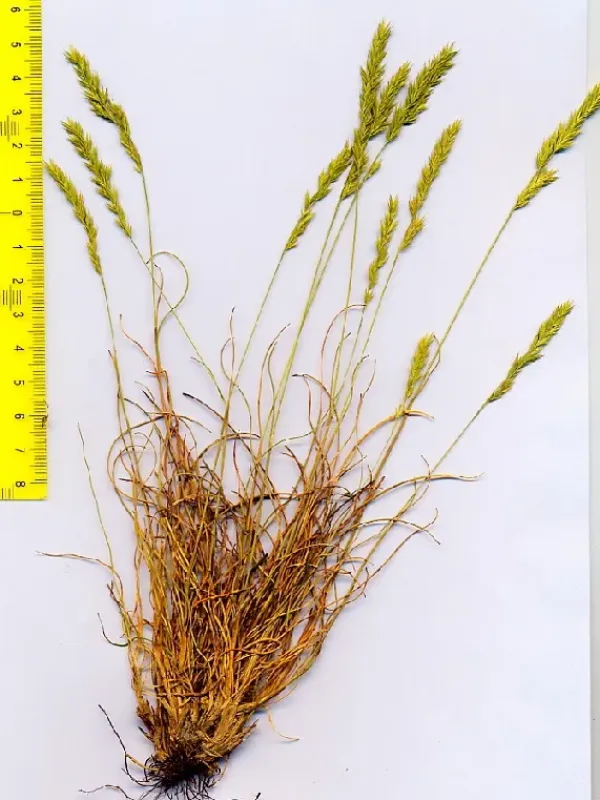
Description
Sowing dates
The best time to sow Occitan fescue is during the early spring or autumn. These periods provide the moderate temperatures necessary for seed germination and root establishment before the onset of summer heat or winter cold.
Seeds should be sown at a shallow depth, typically 1-2 centimeters. Covering the seeds with a light layer of soil or substrate is essential to protect them from birds and desiccation, ensuring a uniform germination rate across the planting area.
It is recommended to roll the area after sowing to ensure proper seed-to-soil contact. This step is vital for moisture retention around the seed, which significantly improves the success rate of the planting in dry or sandy substrates.
During the initial stages of growth, consistent moisture is necessary to support the developing root system. Once the plants have established a deep root network, they become remarkably self-sufficient and require very little supplemental watering.
Seed density should be calculated based on the intended use of the grass. A higher density is recommended for ornamental lawn surfaces, whereas a lower density is often sufficient for slope stabilization or naturalized meadow landscapes.
Growing requirements
Occitan fescue (Festuca occitanica) is a perennial grass species belonging to the Poaceae family. It is native to certain regions in Southern Europe, where it thrives in rocky, well-drained, and nutrient-poor soils, reflecting its high adaptability to harsh environmental conditions.
The plant is highly valued for its drought resistance and ability to maintain a dense, compact form even in poor soils. Its biological structure allows it to effectively conserve water, making it an excellent candidate for xeriscaping and sustainable lawn projects.
This grass prefers full sun exposure and requires excellent soil drainage. It is generally intolerant of waterlogged conditions, which can lead to root system degradation and plant loss if not properly managed through appropriate site selection or drainage systems.
Occitan fescue features narrow, fine-textured foliage that creates a neat, aesthetically pleasing appearance. It is a slow-growing species, meaning it requires less maintenance than traditional high-growth lawn grasses, thus reducing mowing frequency.
In terms of climate, it is well-adapted to Mediterranean and temperate environments. Its robust nature makes it capable of surviving periods of significant heat and moderate frost, maintaining its structural integrity throughout various seasons.
Main diseases and pests
Occitan fescue is generally resistant to most common turf diseases. However, in poorly drained or overly humid environments, it may become susceptible to fungal infections such as root rot or leaf spot, which are often caused by stagnant water.
Weed competition is the primary threat to young seedlings. Because the grass is slow to establish, it can be easily overrun by aggressive weeds. Regular weeding during the first few months of growth is necessary until the fescue creates a dense, competitive mat.
While pests are not a major concern, monitoring for soil-borne insects, such as grubs, is advisable in regions where these are prevalent. Maintaining healthy soil conditions usually prevents large-scale infestation by these pests.
Preventive maintenance, including proper aeration and avoiding excessive fertilization, is the best strategy against threats. Over-fertilizing can lead to succulent growth that is more attractive to pests and more prone to disease.
By providing the appropriate environment — specifically bright light and good drainage — growers can ensure the longevity and health of the Occitan fescue, effectively minimizing the need for chemical intervention.