
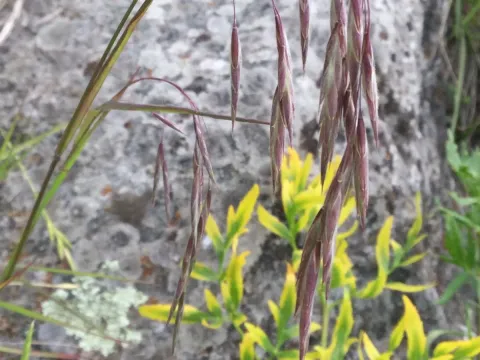
Nodding brome
Bromus anomalus
Nodding brome (Bromus anomalus) is a perennial grass species belonging to the Poaceae family. It is native to the mountainous regions of North America, where it typically thrives in open woodlands, rocky slopes, and mountain meadows, showcasing its natural resilience.
What the section contains
Nodding brome
The species prefers well-drained soils, ranging from sandy to loamy textures. It demonstrates significant tolerance to dry conditions once established, which makes it an excellent candidate for regions with limited rainfall or areas where soil moisture management is a priority.
Regarding climate, Nodding brome is adapted to environments with cool summers and cold winters. It is highly winter-hardy and can withstand frost, allowing it to maintain stable populations in high-altitude or northern agricultural zones.
Botanically, this grass is identified by its nodding panicle inflorescence, which gives the plant its common name. The foliage is typically abundant, and the root system is fibrous and deep, providing structural support to the soil surface.
From an agricultural standpoint, it serves as a valuable forage plant for livestock and a key species in conservation seeding. Its ability to colonize disturbed areas and prevent soil erosion adds significant value to its use in pasture restoration projects.
Nodding brome is generally robust, but it can be susceptible to fungal infections like rust (Puccinia spp.) during seasons with high humidity and poor air circulation. Managing plant density and ensuring proper field drainage are the primary methods for disease prevention.
Insect pests such as grasshoppers and certain types of aphids can affect biomass production during the peak growing season. Integrated pest management, including field monitoring and maintaining biodiversity in adjacent areas, is recommended for long-term health.