
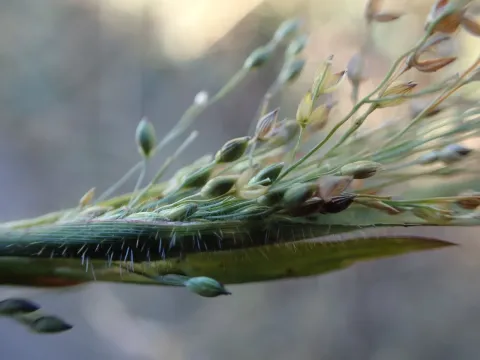
Nine-nerved millet
Panicum novemnerve
The sowing time for Nine-nerved millet is determined by regional climate patterns and the thermal status of the soil, ensuring the seeds have optimal conditions to initiate growth.
What the section contains
Nine-nerved millet
The ideal window for sowing occurs when soil temperatures reach 12–15 degrees Celsius at the seeding depth, facilitating rapid and uniform germination across the field.
Depending on the intended use, such as grain production or biomass harvest, the seeds are planted using either standard row spacing or precision drilling techniques.
Seed depth is generally kept shallow, around 2–3 centimeters, to allow the seedlings to emerge efficiently without exhausting their initial nutrient reserves.
Post-sowing soil compaction is recommended to enhance moisture availability around the seeds, creating a stable environment that supports consistent plant establishment.
Nine-nerved millet belongs to the Poaceae family and is well-recognized for its exceptional resilience and ability to thrive in challenging, moisture-limited environments.
The crop prefers well-drained soil types and is capable of growing in various conditions, including stony or nutrient-poor soils where other crops might fail.
It demonstrates a remarkable tolerance to high temperatures and dry air, making it an excellent candidate for cultivation in arid or semi-arid agricultural regions.
Although it does not require high levels of soil fertility, the strategic application of fertilizers can significantly enhance biomass production and overall crop vitality.
Ample sunlight is essential for the healthy development of this millet, as excessive shade can result in lodging and lower physiological performance of the stand.
Common agricultural threats include fungal infections such as smut and various rusts, which tend to proliferate under high humidity during critical growth stages.
Insects like cereal aphids and various coleopteran pests can impact leaf integrity and sap nutrient levels, necessitating regular field monitoring and integrated pest management.
The use of certified, treated seeds is a primary preventative measure to minimize the incidence of seedling diseases that can occur in the early stages of development.
Weed control is vital to ensure the crop has access to essential soil moisture and light, particularly during the first few weeks after emergence when the millet is most vulnerable.
Employing crop rotation strategies and maintaining appropriate field spacing helps reduce the buildup of species-specific pests and diseases in the soil over time.
Harvesting for grain should be performed when the crop reaches full maturity, ideally at a moisture content of 13–14 percent, to ensure long-term stability during storage.
If harvested for fodder, the plants are cut during the flowering phase to capture the highest nutrient concentration before the tissues become overly lignified.
Modern machinery settings are crucial during the harvest process to prevent mechanical damage to the seeds and to minimize harvest losses in the field.
Post-harvest processing involves cleaning and drying the seeds to meet quality standards, which is necessary to prevent spoilage and maintain high viability for the next season.
The remaining crop residues can be incorporated into the soil profile to contribute organic matter, thereby aiding in the preservation of soil structure and future fertility.