
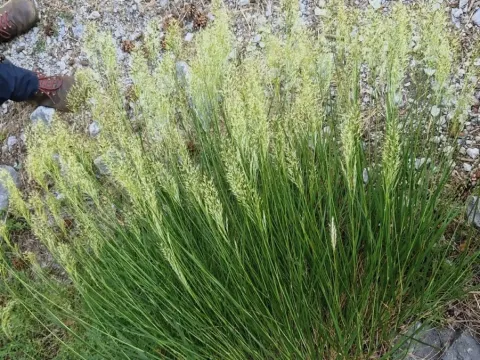
Feather grass
Stipa calamagrostis
Sowing Stipa calamagrostis is best performed in the spring when the soil temperature consistently supports germination, ensuring that the seedlings establish themselves before the heat of the summer.
What the section contains
Feather grass
Given the small size of the seeds, they should be sown shallowly, ideally at a depth of 1–2 centimeters, to allow for optimal exposure to light and oxygen necessary for emergence.
For large-scale cultivation, precision seeders should be used to maintain consistent row spacing of approximately 30–45 centimeters, facilitating easier weed control in the early growth stages.
Sufficient moisture must be provided immediately after sowing to ensure the seeds make proper contact with the soil profile, which is critical for achieving high field emergence rates.
Alternatively, vegetative propagation by dividing established clumps in spring is a highly efficient method for creating dense patches, ensuring immediate results in landscape restoration projects.
The Feather grass is a member of the Poaceae family, recognized for its aesthetic appeal, arched panicles, and its natural adaptation to rocky, calcareous soils in mountainous regions.
This grass thrives in well-drained, sandy, or loamy soil types. It is strictly intolerant of waterlogged conditions, making high-drainage sites essential for long-term survival.
Full sun is required for optimal health; reduced light exposure results in weak stems and significantly diminished flowering, which is the plant's primary decorative feature.
The species exhibits remarkable drought resistance once established, thanks to its deep and fibrous root system, making it an excellent candidate for low-maintenance urban and rural greening.
It displays excellent cold hardiness and remains resilient throughout winter, requiring no specialized protective measures even in climates with significant frost and snow cover.
Feather grass is primarily utilized as an ornamental plant in landscape architecture, valued for its ability to stabilize soil on slopes and provide year-round visual interest.
When maintained properly, the yield of its biomass is consistent; however, for ornamental purposes, the goal is not mass but rather the health and density of the mature clumps.
Seed production yields are generally reliable as the plant produces numerous inflorescences, provided the season has been sufficiently warm to allow for proper seed maturation.
While not a traditional high-output forage crop, its biomass can be processed for mulching or sustainable decorative applications, contributing to the overall utility of the cultivation site.
Regular maintenance, including cutting back dead material after the dormant season, ensures that the plant continues to produce high-quality growth year after year.
Feather grass possesses high natural resistance to most agricultural pests, meaning that chemical interventions are rarely necessary, which aligns well with sustainable farming practices.
The primary concern is the development of root rot, which occurs only if the soil remains excessively moist for extended periods, highlighting the importance of site selection.
Occasional infestations of aphids may occur on the soft spring growth, but these are usually self-limiting and do not warrant systemic insecticide applications under healthy conditions.
Fungal leaf diseases can occasionally emerge in environments with poor air circulation or high humidity, making correct spacing during the initial sowing phase essential for prevention.
Maintaining balanced nutrient availability is key; excessive nitrogen promotes lush but fragile growth that is significantly more susceptible to both pests and fungal pathogens.
Harvesting the Feather grass is typically timed based on its end-of-season dormancy, when the foliage turns to its signature straw color and the panicles are fully dried.
For decorative purposes, harvesting can be delayed until late winter or early spring, allowing the plant to provide winter structure and habitat for beneficial insects in the garden.
To collect seeds, the panicles should be harvested just before they begin to shatter, ensuring that the highest possible quality of viable germplasm is secured.
Cutting the grass to ground level in early spring is standard procedure to prepare the plant for the new growing cycle, promoting clean and vigorous regrowth for the coming year.
Post-harvest processing involves thorough drying in a well-ventilated space to prevent moisture buildup, which ensures the longevity of seeds for storage or future planting projects.