
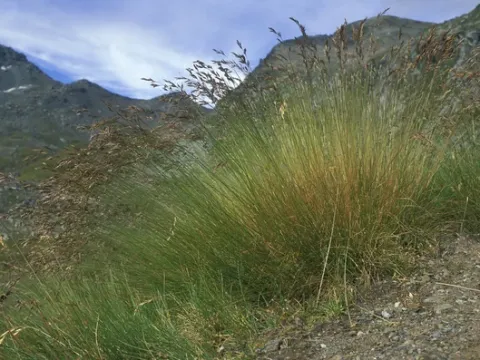
False-variable fescue
Festuca pseudovaria
False-variable fescue (Festuca pseudovaria) is a perennial grass species belonging to the Poaceae family. It is known for its remarkable resilience and ability to thrive in diverse and often harsh environments.
What the section contains
False-variable fescue
This species is well-adapted to well-drained soils, frequently occupying rocky outcrops and thin soil layers where competitive pressure from other species is minimal.
The plant demonstrates significant tolerance to drought conditions and is capable of surviving extreme temperature fluctuations, which makes it suitable for alpine and sub-alpine regions.
It prefers neutral to slightly acidic soil environments. Its deep and extensive root system contributes to soil stability, preventing erosion on slopes and in hilly landscapes.
Optimal growth is achieved under direct sunlight, as the species is sensitive to dense shade and prefers well-aerated soil structures with moderate moisture levels.
The primary agricultural use of Festuca pseudovaria is in the maintenance of extensive pastures and natural rangelands for grazing livestock in mountainous terrains.
The grass provides essential nutrients, particularly during the early vegetative stages, offering a high-quality forage source for cattle and sheep.
Yield capacity is closely linked to the management of grazing pressure; moderate grazing encourages dense tiller formation and helps maintain plant vigor over several seasons.
In addition to its forage value, it is widely utilized for land reclamation projects aimed at restoring vegetative cover on degraded or abandoned agricultural lands.
The biological longevity of the species ensures that it remains a productive component of grass mixtures for many years without the need for intensive nitrogen fertilization.
The main threats to Festuca pseudovaria include rust fungi, which tend to proliferate during seasons with high humidity and stagnant air, impacting overall forage quality.
Various insect pests, such as grass stem borers and aphids, can cause localized damage, particularly during the transition from the vegetative to the reproductive stage.
Overgrazing is a significant risk factor; continuous and excessive defoliation weakens the root structure and reduces the plant's capacity to compete with opportunistic weeds.
Climate change and altered precipitation patterns can stress plant populations, making them more susceptible to opportunistic pathogens and reducing their regenerative capacity.
Effective management requires rotational grazing practices and periodic monitoring of plant health to ensure the long-term sustainability of the grassland ecosystem.