
Feather lovegrass
Eragrostis tenella
Description
Sowing dates
Sowing should take place when stable warm weather conditions are established, as the seeds require pre-warmed soil for active germination. The optimal soil temperature for the start of vegetation is 20–25 degrees Celsius.
Seeding rates depend on the intended use: denser patterns are used for haymaking, while broadcasting followed by rolling is preferred for pasture. Surface sowing is essential as the seeds are small and require minimal covering.
The crop demonstrates high germination energy. With proper moisture, the first shoots appear within 7–10 days, allowing the plant to rapidly occupy the space and compete effectively with weeds.
Under active irrigation, multiple sowing cycles are possible within a single calendar year. This makes feather lovegrass a strategically important plant for regions with short seasons that need rapid replenishment of fodder supplies.
Agronomic care during germination focuses on moisture control. While the plant is drought-resistant, maintaining moderate humidity in the topsoil during the seedling stage is critical to prevent seedling death.
Growing requirements
Feather lovegrass (Eragrostis tenella) belongs to the Poaceae family. It is an annual herbaceous plant valued in tropical and subtropical regions for its ability to produce biomass rapidly in varying environments.
The culture is characterized by high adaptability to various soil types, including sandy and rocky substrates that are low in nutrients. The plant exhibits significant resistance to drought periods and high temperatures.
For optimal growth, feather lovegrass requires high sunlight and heat. It does not tolerate shade or waterlogging, so growers should choose well-drained plots with a neutral or slightly acidic soil pH.
In its native environment, the range of the species covers Asia, Africa, and Australia. The crop is often found as an introduced species in warm-climate regions, where it is utilized for creating pasture lands.
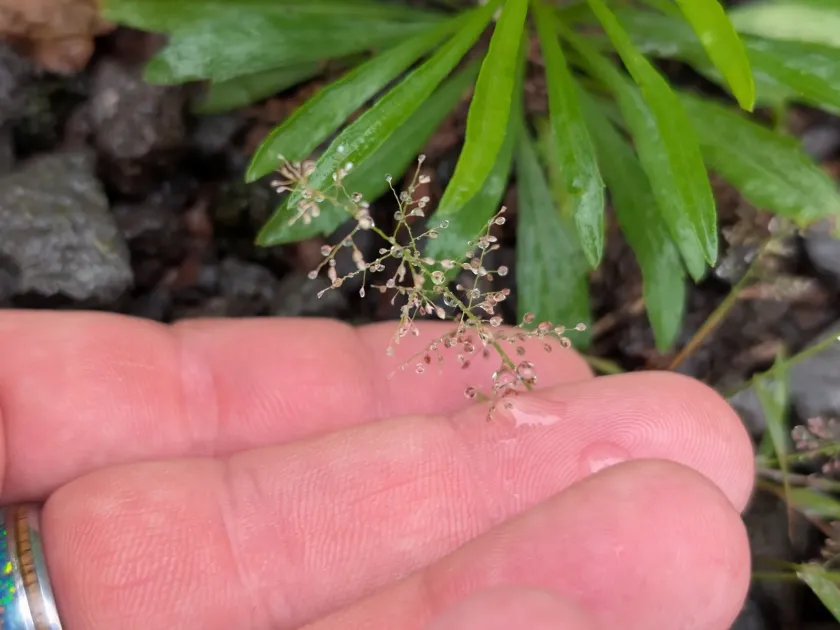
Botanically, it is a short grass with fine stems and panicle inflorescences. The root system is fibrous and well-developed, effectively anchoring the plant in light soils and preventing erosion on slopes.
Yield
Yield of green mass depends directly on mineral nutrition levels and the regularity of rainfall. Despite its ability to grow on poor soils, applying nitrogen fertilizers significantly increases the productivity of the crop.
Average yield figures vary by agro-climatic zone, but with proper technology, high results can be achieved. Feather lovegrass is primarily used as a high-quality forage for livestock.
Its use in animal husbandry is justified by its good nutritional properties. The leaves contain enough protein to be used either fresh or as hay when harvested at the right time.
Economic use also includes land reclamation purposes. Due to its dense turf, feather lovegrass effectively strengthens the soil surface, preventing wind erosion on exposed fields.
To maximize biomass collection, top dressing is recommended after each cutting cycle. This stimulates tillering and allows the plant to recover vegetative mass faster throughout the growing season.
Main diseases and pests
Feather lovegrass has natural immunity to many pathogens common to grass crops. However, if agronomic practices are neglected, especially in conditions of water stagnation, fungal disease outbreaks may occur.
Potential pests include sap-sucking insects like aphids or leafhoppers. Regular monitoring of the field state allows for the timely detection of damage and the application of necessary protection measures.
Crop rotation is the best prevention against the accumulation of soil-borne pathogens. It is not recommended to plant feather lovegrass on the same spot for more than three consecutive seasons without soil enrichment.
Pests like cutworms can cause damage to young seedlings. To protect the crop, both biological control methods and the application of approved insecticides are used in accordance with safety regulations.
An important aspect of protection is weed control in the early stages. Since the grass grows moderately during the initial phases, effective weed removal ensures the plant has the advantage needed to form a dense stand.
Harvesting
Hay harvest is performed during the anthesis stage, before the seeds fully mature. This is when the plant possesses maximum nutritional value and an optimal ratio of stems to leaves.
For green fodder, mowing is done as the biomass reaches the desired height. It is important not to allow the stems to become too coarse, as this reduces palatability and digestibility for livestock.
If the goal is seed production, harvesting should be done when the panicles turn dark. Feather lovegrass seeds tend to shatter easily, so it is not recommended to delay the harvest timeline.
After hay mowing, drying in windrows is recommended to preserve the color and vitamin content of the grass. Rapid drying in hot climates allows for high-quality fodder production with minimal losses.
Harvesting equipment should ensure the purity of the yield, especially during combine harvesting for seeds. Cleaning the seed material is carried out using standard grain cleaning machines with appropriately selected screens.