
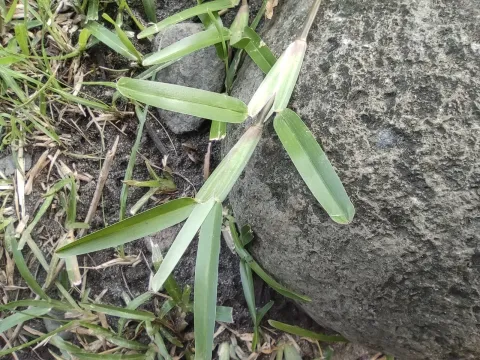
Stenotaphrum dimidiatum
Stenotaphrum dimidiatum
Stenotaphrum dimidiatum, commonly known as buffalo grass or St. Augustine grass, is a perennial stoloniferous grass belonging to the Poaceae family. It is widely valued for its ability to form a dense, uniform carpet of vegetation.
What the section contains
Stenotaphrum dimidiatum
Propagation is strictly vegetative because the plant rarely produces viable seeds in cultivation. Planting is typically achieved by installing sod pieces, plugs, or sprigs into prepared soil during the warm growing season.
Establishment requires firm soil contact and consistent moisture. Sprigs are distributed across the site, followed by light rolling to ensure roots have immediate access to nutrients and soil water.
Spacing between planting units can vary; closer spacing leads to faster ground cover, which is essential for erosion control applications on slopes or high-traffic landscape areas.
Once established, the grass spreads rapidly via creeping stolons. The aggressive nature of these stolons allows the crop to outcompete weeds, provided that growing conditions are favorable.
This grass thrives in tropical and subtropical climates, preferring high humidity and warm temperatures. It is highly intolerant of frost, which limits its outdoor cultivation to regions with mild winters.
It displays remarkable adaptability to various soil types, ranging from sandy soils to heavier clays. While it prefers moist environments, it maintains good performance across a broad spectrum of soil fertility.
A distinctive feature of Stenotaphrum dimidiatum is its shade tolerance. Unlike many other warm-season turf grasses that require full sun, this species performs reliably under partial tree canopy cover.
Water requirements are moderate, though the grass responds positively to irrigation during drought. Its deep root system allows for moderate survival in dry conditions, though appearance may suffer without water.
Optimal maintenance involves regular fertilization with nitrogen-based products to promote leaf production and stolon expansion, ensuring a thick, wear-resistant sward for agricultural or ornamental use.
The Southern chinch bug is a major pest that targets this species, often causing widespread patches of yellowing or necrotic tissue. Early detection is crucial to prevent large-scale destruction of the turf.
Gray leaf spot, caused by the fungus Pyricularia grisea, is the most common disease. It thrives in high-humidity conditions and produces dark lesions on the leaves that can spread rapidly.
Management of these threats emphasizes cultural practices, such as optimizing irrigation timing to keep leaf blades dry and ensuring adequate aeration to discourage fungal growth.
Chemical control measures are used when outbreaks occur, with systemic fungicides and insecticides being the primary defense against recurring pest and disease cycles.
Integrated pest management strategies are recommended to maintain the long-term health of the crop, emphasizing balanced fertility to avoid succulent growth that attracts more pests.