
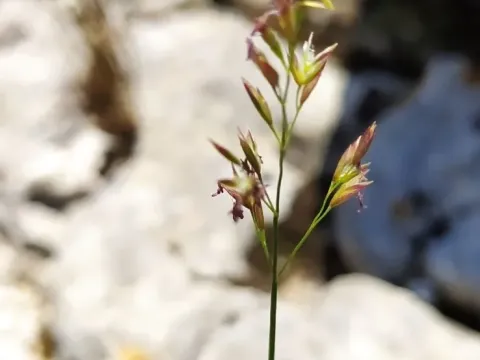
Sterile meadow-grass
Poa sterilis
Sterile meadow-grass (Poa sterilis) is an annual or biennial grass species within the Poaceae family. While not an agricultural crop, it is a significant plant in wild flora and can act as a weed in disturbed agricultural fields and pastures throughout Europe and the Mediterranean.
What the section contains
Sterile meadow-grass
The plant thrives in a variety of soils, showing a preference for well-drained, nutrient-rich substrates. Its natural range encompasses diverse landscapes, from forest edges to open meadows, where it competes for light and essential soil resources with other herbaceous plants.
Botanically, Poa sterilis is characterized by its fibrous root system and slender, upright culms. The leaves are typically narrow and rough to the touch, and the inflorescence is a delicate, spreading panicle, which is typical for the Poa genus.
Climatically, this grass prefers temperate conditions. It is relatively cold-hardy, allowing it to survive through winter in many regions, which gives it a competitive head start in the early spring compared to other annual plants. It is less drought-tolerant than some other weeds but recovers quickly after rainfall.
In the context of agricultural land management, the presence of this species is often monitored. While it provides ground cover, its potential to aggressively colonize fields makes it a species that farmers generally seek to manage through appropriate tillage and crop rotation practices.
As a host plant, Poa sterilis can harbor various plant pathogens. Fungal diseases such as rusts and powdery mildew often utilize this grass as an alternative host, facilitating the transmission of diseases to nearby cereal crops like wheat and barley.
Pests that affect cereal crops, including various aphids and mites, find shelter and nutrition in patches of sterile meadow-grass. This makes the species a relevant factor in the overall Integrated Pest Management (IPM) strategy for large-scale agricultural farms.
Effective management strategies include the use of selective herbicides and mechanical weeding. Given its reproductive strategy, controlling the weed before it sheds its seeds is crucial for reducing future population density within the field boundaries.
Crop rotation serves as a powerful tool to minimize the impact of Poa sterilis. Alternating cereal crops with broad-leaved plants disrupts the growth cycle of this grass and allows for more targeted chemical application if necessary.
Monitoring field edges and non-cropped areas is recommended to prevent the encroachment of this species into production fields. Regular inspections during the early vegetative phase of crops help in early detection and management of potential infestations.