
Sticky lovegrass
Eragrostis viscosa
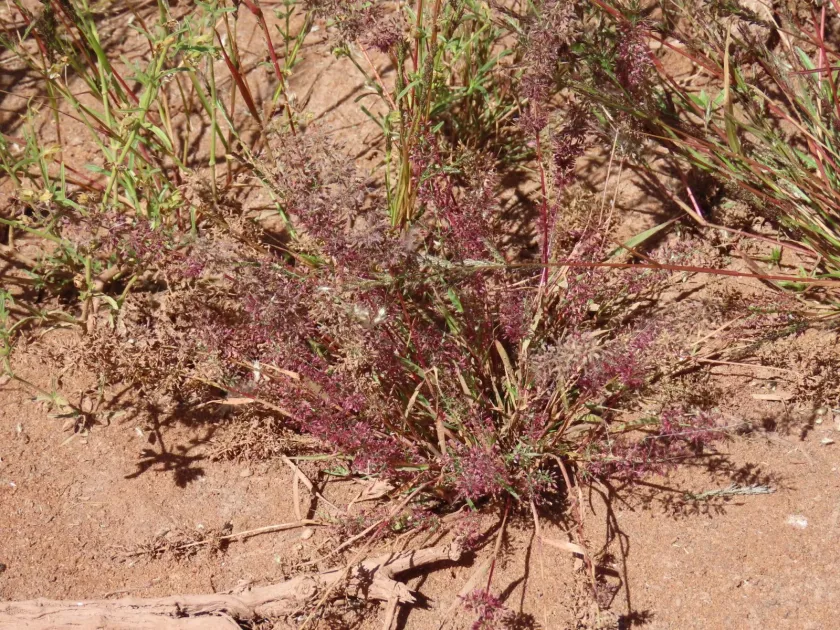
Description
Sowing dates
Sticky lovegrass is a heat-loving cereal crop, meaning sowing should take place when soil temperatures consistently reach 15-18 degrees Celsius. In tropical and subtropical regions, planting typically aligns with the beginning of the rainy season to provide sufficient moisture for germination.
Due to the extremely small size of the seeds, planting depth must be kept shallow, ideally no more than 0.5 to 1 centimeter. Following sowing, rolling the soil is a critical step to ensure optimal soil-to-seed contact and prevent wind erosion of the seedbed.
In commercial cultivation, sowing is conducted using either row or broadcast methods depending on the target yield. For biomass production, higher seeding densities are preferred, while seed production plots require wider spacing to allow for full development.
Seedlings emerge quickly under moist conditions; however, they are highly sensitive to weed competition during the early growth stages. Therefore, timely manual or mechanical weeding is essential to ensure the crop gains a competitive advantage.
It is vital to avoid any risk of late frosts, as Eragrostis viscosa seedlings are highly susceptible to damage and will perish even with brief exposure to sub-zero temperatures.
Growing requirements
As a member of the Poaceae family, sticky lovegrass is remarkably tolerant of sandy and nutrient-poor soils. It can thrive in environments where more demanding cereal crops would struggle due to low soil fertility.
The crop prefers sunny, well-lit locations and performs poorly in shaded conditions. It is well-adapted to high solar radiation environments and displays exceptional drought tolerance, primarily due to the specific structure of its root system.
The optimal pH range for this crop is slightly acidic to neutral. While it can withstand temporary waterlogging, it performs best on well-drained substrates where water stagnation is effectively avoided.
A distinctive feature of the plant is the presence of sticky glands on its stems and leaves. This evolutionary adaptation allows the crop to retain moisture effectively and limit transpiration during periods of extreme heat.
- High responsiveness to nitrogen fertilization.
- Strong requirement for intense sunlight exposure.
- Moderate tolerance to soil salinity levels.
Yield
The biomass yield of sticky lovegrass is highly dependent on irrigation management and nutrient application during the tillering phase. Under optimal conditions, the crop is capable of producing multiple cuts within a single growing season.
The harvested biomass is relatively palatable, making it a valuable feed source for small ruminants. Its high regeneration capacity allows for frequent grazing without exhausting the plant's resources.
Seed yields can be variable because of asynchronous flowering. Careful monitoring is required to determine the precise harvest window to minimize yield losses caused by natural shattering of seeds during the final maturation stages.
The nutritional profile makes this grass a promising candidate for restoring degraded pastures. Farmers value its consistent productivity during periods when other forage species enter a state of dormancy due to extreme heat stress.
Overall output per hectare can be quite high, allowing sticky lovegrass to serve as a reliable foundation for fodder security in arid and semi-arid climatic zones.
Main diseases and pests
The primary threats to Eragrostis viscosa are fungal diseases that proliferate during periods of high humidity and poor air circulation. Rusts and powdery mildew are the most common pathogens that can significantly reduce leaf photosynthetic efficiency.
Pests, particularly cereal aphids, can cause significant damage to young shoots, leading to structural deformation and reduced plant vigor. Early detection through regular field scouting allows for targeted control measures.
Root rots are a frequent issue in poorly drained fields. Maintaining adequate drainage and practicing crop rotation are the primary methods for mitigating the risks associated with these soil-borne pathogens.
In certain regions, orthopteran insects such as locusts can cause severe defoliation during dry years. In such instances, biological control methods or selective insecticides may be necessary to preserve the crop's yield potential.
Nematode infestations can also suppress root development, manifesting as stunted growth and chlorosis. To minimize these risks, it is recommended to avoid continuous cropping and maintain diverse rotation cycles.
Harvesting
Harvesting for biomass is ideally conducted at the onset of the flowering phase, when the plant contains its peak nutrient levels. Delaying the harvest leads to stem lignification and a subsequent decrease in palatability for livestock.
For seed production, harvesting should commence when the panicles turn a straw-yellow color, but before significant natural seed shattering occurs. Combine harvesters should be operated at low drum speeds to ensure seed integrity.
The hay-making process typically involves the use of mower-conditioners, which significantly accelerate the drying process. Reducing the moisture content quickly is vital to prevent molding during long-term storage.
After windrow drying to a moisture content of 15-18 percent, the biomass is baled. This compacts the material for efficient transport and ensures stable storage conditions within covered facilities.
The most favorable time for harvesting is during early morning hours, when ambient humidity is higher, which effectively reduces the risk of seed shattering caused by mechanical agitation.