
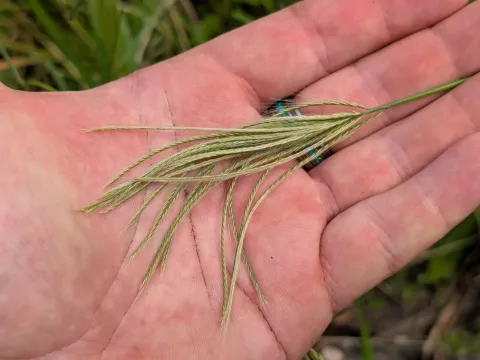
Starlite fingergrass
Chloris radiata
Chloris radiata, commonly known as starlite fingergrass, is an annual grass species belonging to the Poaceae family. This plant is recognized for its rapid growth cycle and is primarily found in tropical and subtropical regions across the Americas.
What the section contains
Starlite fingergrass
Botanically, the plant is characterized by its spreading habit and distinctive inflorescences that radiate from the tips of the stems. These structures are efficient for seed dispersal and contribute to the plant's aggressive colonizing capability in disturbed soil environments.
The culture thrives in well-drained soils, showing a preference for sandy or light loamy compositions. It is highly valued in agricultural research for its exceptional drought tolerance, which allows it to persist under challenging environmental conditions where other forage grasses might fail.
Climatic requirements for Chloris radiata are strictly associated with warm weather. It requires consistent sunlight and high temperatures to reach its full productive potential, as it lacks the physiological mechanisms to survive frost or extended cold periods.
In terms of agricultural management, the plant requires minimal input if environmental conditions meet its heat and soil structure needs. It is an opportunistic species that responds positively to periodic grazing, which stimulates new vegetative growth and maintains the quality of the fodder.
Chloris radiata is susceptible to several fungal diseases, particularly rusts, which can proliferate if the plant is grown in areas with poor ventilation or high humidity levels during the wet season.
Pest pressures primarily include various leaf-feeding insects and stem borers, which can undermine the structural integrity of the grass and negatively impact the overall biomass production.
Producers should implement regular grazing or mowing schedules to mitigate the accumulation of plant debris, which acts as a reservoir for pathogens and harmful insects during the off-season.
Leaf spot diseases are occasionally reported, often exacerbated by mechanical damage from insects, necessitating careful monitoring of leaf health throughout the active growing period.
The use of integrated pest management strategies is highly recommended to keep populations of harmful insects below economic thresholds without compromising the safety of the forage for livestock consumption.