
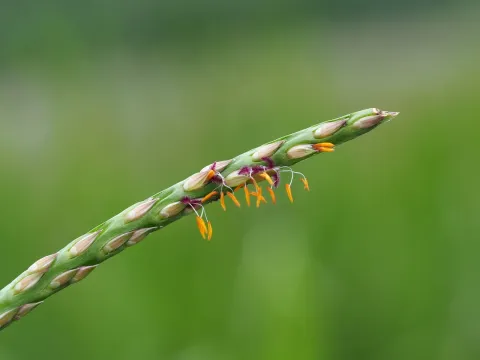
Stenotaphrum
Stenotaphrum
Stenotaphrum is a genus of perennial grasses belonging to the Poaceae family. The most widely utilized species in agriculture and landscaping is Stenotaphrum secundatum, commonly known as St. Augustine grass.
What the section contains

Stenotaphrum
Originating from tropical and subtropical regions across the Americas, Africa, and the Pacific, this grass thrives in warm, humid climates where frost is rare or non-existent.
The plant is characterized by its prostrate growth habit and vigorous stolons, which creep along the ground and root at the nodes to form a dense, lush, and carpet-like sod.
It requires well-draining soil and can adapt to a range of soil types, though it performs best in fertile, slightly acidic to neutral soils. One of its key features is its high tolerance to salt, making it a preferred choice for coastal landscape development.
Proper maintenance of Stenotaphrum includes regular mowing to keep the turf at the desired height, consistent irrigation during dry spells, and adequate fertilization to support its fast vegetative growth.
Grey leaf spot, caused by the fungus Pyricularia grisea, is one of the most common and damaging diseases for this grass, particularly during warm and humid growing seasons.
Viral infections, such as the St. Augustine decline (SAD) caused by the panicum mosaic virus, can cause yellowing and stunted growth, severely impacting the turf's quality.
Pest issues often involve chinch bugs, which suck sap from the grass blades, causing patches to turn yellow and eventually die if left untreated.
Root-knot nematodes can also pose a significant problem, especially in sandy soils, by damaging the root system and preventing the grass from absorbing water and nutrients effectively.
Effective management includes integrated pest control strategies, careful monitoring of irrigation levels, and the selection of disease-resistant cultivars to ensure a healthy turf stand.