
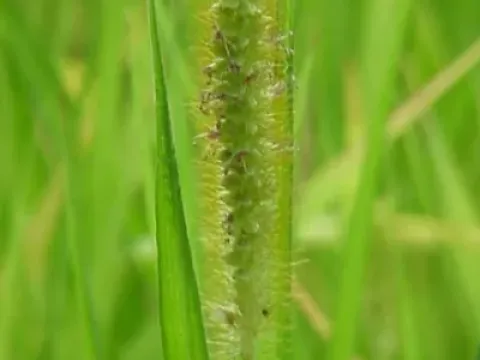
Setaria orthosticha
Setaria orthosticha
Sowing of Setaria orthosticha should be performed once the soil has sufficiently warmed, typically when temperatures at seed depth reach 12–15°C. Mid-May is generally the optimal window to ensure the crop avoids late spring frosts.
What the section contains
Setaria orthosticha
Achieving the correct planting depth is crucial for uniform emergence. Given the small size of the seeds, it is recommended to drill them at a depth of no more than 2–3 centimeters into a well-prepared seedbed.
Seeding rates are determined by the intended final product, whether for forage or seed production. For fodder purposes, a typical seeding rate ranges from 12 to 16 kilograms per hectare.
Using a row-drilling method with spacing between 15 and 20 centimeters ensures even plant distribution. This configuration facilitates better airflow and allows for efficient mechanical weed control between the rows.
Rolling the soil both before and after planting is a critical practice. This ensures an optimal seed-to-soil contact, which significantly improves moisture absorption and accelerates germination in varied soil conditions.
Setaria orthosticha belongs to the Poaceae family and is a warm-season grass that exhibits significant drought tolerance. Its root system is highly effective at extracting moisture from deeper soil layers.
The crop thrives in light sandy loam or loamy soils with a neutral to slightly acidic pH. It performs poorly in waterlogged environments or heavy clay soils that are prone to stagnant water.
This grass shows high growth vigor under conditions of long photoperiods and intense solar radiation. In regions with hot summers, it is capable of producing a large volume of biomass in a relatively short period.
While its nutrient requirements are moderate, the crop responds positively to nitrogen fertilization during the early vegetative stages. Phosphorus and potassium applications help strengthen stalks and improve resistance to lodging.
The species possesses high adaptability to diverse agro-climatic zones, particularly in steppe regions. It withstands brief drought spells effectively, maintaining productive yields with minimal agricultural intervention.
The productive potential of Setaria orthosticha is directly linked to management practices and soil fertility. With optimal agronomic practices, green mass yields can reach 20–30 tonnes per hectare.
Seed yield is generally stable, provided that the harvest timing is managed carefully to mitigate losses from shattering. Under favorable conditions, seed yields average between 1.5 and 2 tonnes per hectare.
Early-season weed competition is the primary limiting factor for crop development. Timely mechanical inter-row cultivation significantly boosts final biomass output by reducing competition for light and nutrients.
Irrigation applied during the tillering stage can increase green mass production by 30–40 percent. Even in non-irrigated conditions, the crop remains a reliable producer compared to more water-demanding grass species.
Yield estimation is best conducted at the full heading stage, when nutrient accumulation in stems and leaves is at its peak, ensuring maximum nutritional value for livestock utilization.
Rust diseases are common in Setaria orthosticha, particularly during periods of high atmospheric humidity. Infestation significantly reduces the nutritional quality of the forage and stunts plant growth.
Various species of smut can infect the inflorescences, severely impacting seed viability. To prevent such diseases, it is essential to treat seeds with appropriate fungicides before planting.
Pests such as cereal flies and aphids can inflict damage on young seedlings. Regular field monitoring allows for the early detection of infestations, enabling the timely application of biological or chemical control measures.
Stem borers may damage generative organs, leading to malformed panicles. Systemic insecticides are effective in managing these pests when applied during the peak activity period of the adult insects.
Weed competition during the first half of the vegetative cycle acts as an indirect threat. Besides depleting nutrients, weeds serve as potential hosts for various pathogens that can compromise the plant's health.
Harvesting for green mass should take place during the heading stage, before the stems become overly lignified. This ensures an optimal balance of fiber and sugars for livestock rations.
For hay production, mowing should be followed by rapid wilting in windrows. This method helps preserve the green color and nutritional density, preventing losses associated with prolonged exposure during drying.
Seed harvesting is performed via direct combining or swathing when the panicles turn color. It is crucial to monitor the field closely to avoid shattering losses due to wind or mechanical stress.
Post-harvest processing involves cleaning impurities and drying the seeds to a moisture content of no more than 12–13 percent. Storing in cool, dry conditions ensures long-term seed viability.
Mechanical harvesting requires specific adjustments to the combine's threshing unit to accommodate small seeds. Lowering the cylinder speed minimizes seed breakage and preserves overall seed quality for future planting.