
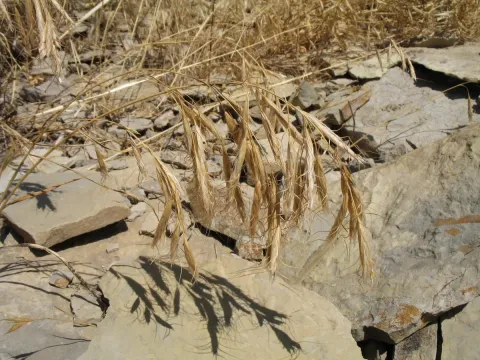
Sharp-toothed brome
Bromus oxyodon
Sharp-toothed brome (Bromus oxyodon) is a resilient perennial grass species within the Poaceae family, recognized for its durability in arid environments.
What the section contains
Sharp-toothed brome
Sowing is best performed in early spring when soil moisture is sufficient to support rapid germination and establishment of the seedlings.
Late autumn sowing is also a viable strategy, allowing seeds to remain dormant through winter and sprout as soon as soil temperatures permit.
The standard seeding rate is typically between 12 and 15 kilograms per hectare, depending on local conditions and the intended use of the land.
Ensuring proper seed-to-soil contact through light rolling after sowing significantly improves the success rate of the stand establishment.
This grass species is highly drought-tolerant, making it an excellent choice for planting on dry, rocky, or degraded soil landscapes.
It prefers well-drained loamy soils but displays remarkable versatility by surviving in various soil types, including slightly saline soils.
As a sun-loving plant, Bromus oxyodon performs best in open areas where it does not compete for light with taller vegetation.
Its robust root system contributes to superior soil binding, making it highly effective for erosion control on slopes and unstable terrains.
While tolerant of low fertility, providing balanced nitrogen fertilization during the early growth stages promotes denser, more productive stands.
Under favorable management, the crop produces between 15 and 25 tons of green biomass per hectare, providing consistent fodder yields.
It is valued for its versatility, functioning effectively as both a hay crop and a grazing resource throughout the growing season.
The plant exhibits excellent regrowth capacity after cutting, allowing for multiple harvests or grazing rotations within a single year.
Yield stability is maintained over several seasons, provided that the soil nutrient balance is managed with appropriate fertilizer inputs.
Integrating this brome into mixed forage systems enhances the overall productivity and nutritional output of the pasture land.
The crop is generally resistant to many common grass diseases, although prolonged humidity may trigger mild outbreaks of powdery mildew.
Rust diseases can occasionally affect foliage quality during wet seasons, potentially reducing the overall protein content of the harvested hay.
Insect pests such as cereal flies may target young seedlings, necessitating careful monitoring during the early spring developmental phase.
Aphids can also cause minor damage during peak summer growth, though they rarely cause total crop failure in established fields.
Implementing integrated pest management practices and avoiding excessive nitrogen fertilization helps maintain healthy, pest-resistant stands.
Harvesting for high-quality hay should occur at the late booting to early heading stage, before the development of fibrous tissues.
Delaying the harvest leads to a rapid decline in nutritional value as the plants lignify, making them less palatable for livestock.
When harvesting for seed production, timing is critical to minimize shatter losses during the ripening phase in late summer.
Utilizing modern mechanical harvesting equipment ensures clean cuts and uniform wilting, facilitating efficient storage as hay or silage.
Strategic management of harvest intervals is essential for maintaining plant vigor and ensuring the longevity of the perennial grass stand.