
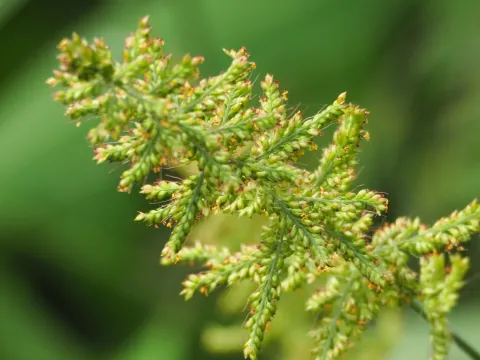
Setaria barbata
Setaria barbata
Setaria barbata, commonly known as a grass species of the Poaceae family, thrives in tropical and subtropical climates. Sowing usually begins at the onset of the rainy season to capitalize on moisture availability for seed germination.
What the section contains
Setaria barbata
The ideal soil temperature for planting ranges from 18 to 20 degrees Celsius. Farmers should ensure the seedbed is well-prepared and free from weeds to allow the seedlings to establish a strong root system during the initial growth phase.
Seeds are typically sown at a shallow depth of 1–2 centimeters. Proper spacing is crucial to reduce competition between plants, which promotes uniform growth and higher biomass production throughout the field.
Fast early development is a hallmark of this species, allowing it to suppress invasive weeds naturally. In intensive agricultural systems, precision planting techniques are used to optimize seed usage and ensure consistent crop density.
Agronomists suggest treating the seeds before sowing to improve resistance to soil-borne pathogens. Adequate moisture during the first two weeks is essential for ensuring successful emergence and establishing a healthy stand.
Setaria barbata is a heat-loving plant that requires plenty of sunshine for optimal development. It is highly sensitive to frost, which makes it unsuitable for temperate regions unless grown exclusively during the peak of summer.
The crop performs best in well-drained loamy or sandy soils with a pH ranging between 5.5 and 7.0. While it displays some tolerance to varying soil conditions, waterlogging should be avoided as it hinders root respiration.
Nitrogen fertilization is vital for boosting leaf production and stem strength. Incorporating organic matter during soil preparation enhances water retention and provides a steady supply of nutrients for the growing plants.
Though it can survive short dry spells, supplemental irrigation is recommended in arid environments to reach maximum yield potential. Consistent water availability keeps the leaves tender and nutrient-dense.
Proper field management includes regular monitoring of soil nutrient levels. Since the plant has a rapid growth rate, it quickly consumes available soil nitrogen, requiring a well-planned fertilization schedule.
The yield of Setaria barbata is determined by the environmental conditions and the frequency of harvesting. When managed effectively, it can produce significant quantities of green forage for livestock feed.
Under favorable management, the crop can yield between 15 and 30 metric tons of green matter per hectare. Repeated harvesting at the correct physiological stage promotes lateral branching and increases total output.
The nutritional value is highest when the plant is harvested in the early flowering phase. Delaying the harvest leads to lignification of the stems, which decreases palatability and digestibility for grazing animals.
Seed production requires leaving a portion of the crop to reach full maturity. Careful timing is needed to prevent premature seed shattering, which can significantly reduce the potential harvest volume.
Forage quality remains the primary focus in most farming operations. A balance between volume and quality is achieved by monitoring the growth stage and adjusting harvest intervals accordingly.
Like many grasses, Setaria barbata is susceptible to rust and smut fungi, particularly in humid and stagnant air conditions. Improving field ventilation and adhering to crop rotation helps mitigate these risks.
Pests such as aphids and various soil-dwelling larvae can cause damage to the foliage and root systems. Integrated pest management strategies are advised to keep populations below economic damage thresholds.
Weed competition during the first month is the greatest threat to overall crop density. Pre-emergence cultivation or the use of selective herbicides can significantly protect the young plants.
Disease prevention starts with using high-quality, certified seeds. Avoiding continuous monoculture of Setaria species helps break the life cycles of specific pathogens that target this grass.
Field observation is necessary to detect early signs of infestation. Timely intervention with biological or chemical control measures is far more effective than trying to manage a fully developed outbreak.
Harvesting for forage is best performed with sickle-bar or disc mowers. Cutting the plant at a height of 5–7 centimeters ensures rapid regrowth and protects the lower nodes of the stem.
If the crop is intended for silage or hay, it should be processed immediately after mowing to prevent nutrient loss. Quick drying is essential in hot climates to maintain the quality of the harvested biomass.
When harvesting for seeds, the plants should be cut when the seed heads turn brown. Using a combine harvester with adjusted settings minimizes seed loss and ensures clean material.
Seed drying and storage are critical final steps. Ensuring moisture levels drop below 14% prevents mold growth and preserves seed viability for the next planting season.
Proper harvest logistics, including the use of efficient transport and storage facilities, are necessary to maintain the economic viability of Setaria barbata as a productive agricultural crop.