
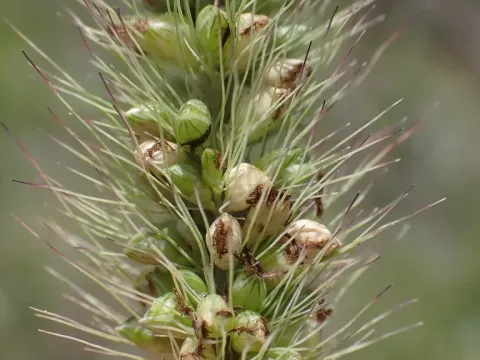
Setaria nigrirostris
Setaria nigrirostis
Sowing of Setaria nigrirostris should be carried out when the soil temperature at the planting depth reaches at least 12–15 degrees Celsius. Being a warm-season grass, it is highly sensitive to frost, so planting is typically scheduled for late spring or early summer.
What the section contains
Setaria nigrirostris
Seeds are sown at a shallow depth of 2–3 centimeters. Providing good soil-to-seed contact is essential for uniform germination, and rolling the soil after planting is a recommended practice to ensure the capillary movement of moisture to the seeds.
The seeding rate depends on the intended end-use of the crop, whether it is for hay production or direct grazing. Standard row spacing is usually maintained to ensure adequate canopy development and to minimize competition from weeds during the early establishment phase.
Applying starter fertilizers during the sowing process can significantly improve seedling vigor. Phosphorus and small amounts of nitrogen help establish a strong root system, which is crucial for the plant's subsequent rapid growth and drought resistance.
Uniformity in sowing is key to success. Proper seedbed preparation prevents deep planting, which can lead to poor emergence. A well-managed stand established at the right time is significantly more productive throughout the growing season.
Setaria nigrirostris is an annual grass species belonging to the Poaceae family. Originating from Southern African regions, it is naturally adapted to warm climates and possesses inherent drought-tolerant characteristics that make it valuable for agriculture.
The crop thrives in well-drained, fertile soils but demonstrates remarkable plasticity in diverse soil types. It prefers a pH range between 6.0 and 7.5, performing well on sandy loams and lighter soil textures that warm up quickly during the spring season.
Waterlogging and poor drainage are detrimental to this species, as its roots are prone to decay in saturated conditions. Therefore, choosing elevated or well-leveled fields that prevent water ponding is a critical requirement for successful cultivation.
Being a heliophilic plant, Setaria nigrirostris requires ample sunlight for optimal photosynthesis and tiller formation. Excessive shading from nearby trees or tall weeds reduces plant vigor and biomass accumulation significantly.
The species is highly valued for its ability to withstand high temperatures and erratic rainfall. It is an ideal component for forage systems in regions where traditional temperate grasses struggle to maintain productivity during the summer heat.
The yield of Setaria nigrirostris is primarily determined by moisture availability and soil fertility management. Under optimal conditions, with sufficient rainfall or supplemental irrigation, the crop can produce high yields of high-quality biomass.
Its strong tillering capacity allows it to regrow rapidly after mowing or grazing. With efficient management, multiple cuts per season are possible, significantly increasing the total dry matter production compared to other annual grasses.
To maximize nutrient density, the first harvest should ideally occur at the onset of the heading stage. Harvesting at this time ensures the best balance between protein content and structural fiber, which is vital for animal performance.
Even in dry conditions, the plant enters a period of reduced metabolic activity rather than dying, allowing for rapid recovery when favorable conditions return. This resilience makes it a reliable feed source for livestock in risk-prone climates.
Consistent yield improvement is achieved through the use of high-quality seeds. Avoiding the use of seeds with low germination energy prevents stand thinning and ensures that the crop maintains its biological potential throughout the vegetative period.
Setaria nigrirostris is generally resistant to many common cereal diseases. However, in environments with poor ventilation or high humidity, crops can be susceptible to powdery mildew or fungal rusts that affect the leaf blades.
Soil-borne pests and cereal flies can occasionally pose a threat to younger plants during the establishment phase. Monitoring the field for early signs of damage is essential for maintaining a healthy and productive stand of forage.
Crop rotation is the most effective cultural practice for managing potential threats. Avoiding the monoculture of grasses for consecutive years helps disrupt the life cycles of pathogens and pests that might otherwise accumulate in the field soil.
Weed control is vital, as competing weeds can serve as hosts for pathogens and consume resources meant for the grass. Maintaining a dense, healthy stand through proper seeding density is the best preventative measure against weed infestation.
Chemical intervention is rarely necessary for this species, reflecting its robustness. This low-input requirement makes Setaria nigrirostris a sustainable choice for farmers looking to reduce production costs while maintaining high-quality livestock feed.
Harvesting for hay should be performed when the crop begins to head, as this stage offers the highest nutritional quality. Mowing at the right maturity level prevents the stems from becoming too lignified and difficult for livestock to digest.
Mowers equipped with conditioners are recommended to speed up the drying process. Reducing the time the forage remains in the field lowers the risk of nutrient leaching and ensures the preservation of vitamins during the haymaking process.
For seed production, harvesting commences once the inflorescences darken and seed moisture content decreases to a safe level. Careful threshing and cleaning are necessary to maximize the recovery of clean, high-viability seeds for future seasons.
Proper storage of the harvested hay is essential for maintaining long-term quality. Protecting the forage from moisture and ensuring good ventilation prevent mold growth, allowing the feed to maintain its value throughout the winter feeding period.
In grazing scenarios, the crop should be managed to prevent overgrazing, which can damage the growing points and reduce regrowth rates. Rotational grazing is the preferred strategy to ensure long-term productivity of the pasture.