
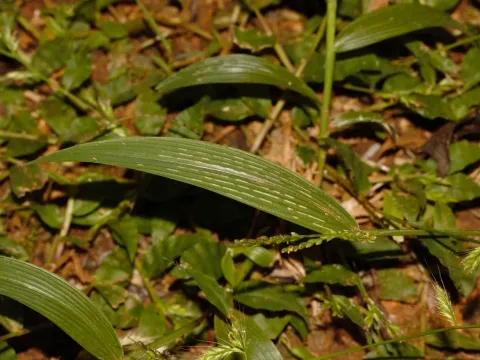
Setaria homonyma
Setaria homonyma
Setaria homonyma is an annual grass species belonging to the Poaceae family. Primarily found in tropical and subtropical regions of Africa and Asia, it is known for its high resilience to environmental stressors and rapid growth cycle.
What the section contains
Setaria homonyma
The plant thrives in well-drained loamy soils and requires a warm climate to achieve its maximum biomass potential. It shows excellent heat tolerance, allowing it to flourish during seasons when other forage crops might struggle.
Agronomic management involves selecting fertile, well-structured soils. While the species is somewhat drought-tolerant, supplemental irrigation during the initial germination phase significantly improves stand density.
Botanically, Setaria homonyma features an erect habit with densely packed inflorescences. The foliage is high in crude protein content when harvested at the vegetative stage, making it an excellent fodder option.
In agricultural systems, this plant is utilized mainly for livestock grazing or as a source of dry hay. Its ability to regrow after cutting makes it a viable candidate for multi-cut harvest systems in favorable climates.
Common agricultural threats include fungal pathogens such as leaf rusts and smut, which can significantly damage leaf tissues and decrease the overall nutritional quality of the forage if left untreated.
Insect pests, including aphids and various stalk-boring moths, pose a risk to the crop by disrupting nutrient transport and weakening the structural integrity of the stems during the flowering phase.
Weed infestation is a major challenge during the early seedling stage. Without adequate weed management strategies, the slow early growth of the grass can be easily overwhelmed by faster-growing competitive vegetation.
Soil-borne diseases can accumulate if crop rotation cycles are ignored. It is essential to avoid planting Setaria homonyma in fields previously occupied by related cereal crops to prevent pathogen buildup.
Effective crop protection relies on regular field scouting, maintaining optimal plant density, and the judicious application of herbicides or fungicides if specific threshold levels of pests or diseases are exceeded.