
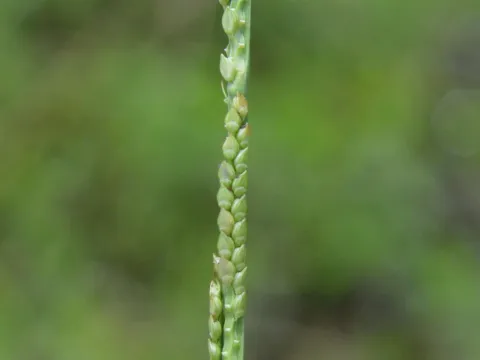
Setaria geminata
Setaria geminata
Setaria geminata is a warm-season annual grass, and therefore the sowing schedule depends on soil warming. In cultivation regions, planting is carried out when soil temperature reaches +12...+15°C.
What the section contains
Setaria geminata
The optimal time for establishing crops is late spring or early summer. It is crucial to avoid early spring frosts, as the seedlings of this crop are extremely sensitive to low temperatures.
Seeding depth depends on the soil type and typically ranges from 2 to 4 centimeters. If the topsoil is dry, it is necessary to lightly compact the soil to ensure better seed-to-soil contact for germination.
The seeding rate is determined by the intended purpose, whether for hay or green biomass. On average, the seed rate is 10 to 15 kilograms per hectare when sown in rows.
To ensure uniform emergence, fields should be cleared of weeds beforehand. Setaria geminata is known for its strong initial growth energy, with seedlings typically emerging 7–10 days after planting under favorable conditions.
This crop has moderate requirements for soil fertility, although it thrives best on loamy and fertile chernozem soils. It demonstrates a high degree of adaptability to various environmental conditions.
Setaria geminata is highly light-demanding and performs poorly under shading during early growth stages. Under low light conditions, vegetative biomass develops slowly, negatively impacting the quality of the harvested material.
The plant possesses higher drought tolerance compared to other grass family members. Due to its well-developed root system, it can effectively access moisture from deeper soil layers.
For optimal growth, the crop requires a stable temperature range of +20...+28°C. Excessive soil saturation, especially on heavy clay soils, may lead to root rot during the first weeks of the growing season.
The application of mineral fertilizers, particularly nitrogen, significantly increases the biomass growth rate. Crop rotation is also recommended, with the grass serving as an effective component of the green forage cycle.
Biomass yield of Setaria geminata depends on the level of agronomic care and moisture availability during the tillering phase. Under favorable conditions, yields can reach 20–30 tons per hectare.
Maximum productivity levels are achieved through supplemental irrigation during dry periods. Intensive stem branching allows for the formation of a dense sward that is suitable for multiple mowings.
The dry matter contains a high percentage of protein and fiber, making this grass a valuable component of livestock feed. Nutritional value is maintained until the beginning of the flowering phase.
To increase yields, harrowing the field during the two-to-three-leaf stage is recommended. This practice improves soil aeration and controls early weeds that compete for essential nutrients.
When grown for seeds, yields average 500–800 kilograms per hectare. Success depends largely on protecting the crop from birds, which are often attracted to the ripening seeds.
Fusarium root rot is identified as a primary disease, particularly in overly wet soil conditions. Proper field drainage is the best preventative measure against this pathogen.
Leaf spots caused by fungal pathogens may reduce the quality of green forage during rainy seasons. If early signs appear, it is recommended to reduce irrigation and apply appropriate preventative measures.
Among pests, cereal flies and aphids pose the greatest threat, as they damage young seedlings. During active growth, the crop may also be attacked by stem borers.
Systemic insecticides are used to control pests according to local regulations. Early management of weed reservoirs, where pests often multiply before moving to the crops, is also highly effective.
- Fusarium root rot.
- Cereal aphids.
- Helminthosporium leaf spot.
- Stem borer damage.
Harvesting for green biomass is best performed at the boot stage, when nutrient content in the stems is at its peak. Delaying harvest leads to coarser tissues and decreased feed palatability.
When making hay, it is essential to ensure rapid drying of the windrows to preserve the green color and aroma of the grass. Drying usually takes two to four days depending on weather conditions.
Harvesting equipment should be set to cut at a height of 5–7 centimeters to stimulate regrowth. This allows for a second harvest within the same growing season.
For grain harvest, wait until the seeds reach full wax maturity. Because the seeds of Setaria species are prone to shattering, direct combining should be performed once optimal seed moisture is reached.
Post-harvest seed processing includes thorough cleaning and drying to a standard moisture level of 12–14%. Seeds should be stored in ventilated facilities protected from pests.