
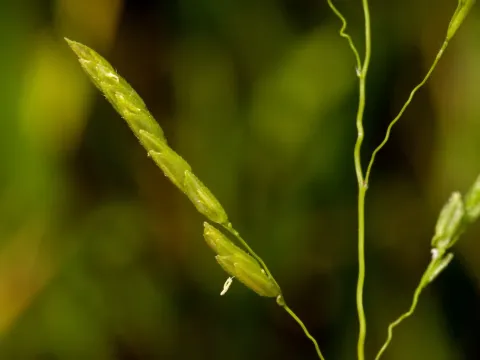
Leersia
Leersia
Leersia is a genus of perennial grasses belonging to the Poaceae family, widely known for its presence in wetland ecosystems. It is closely related to rice and shares similar morphological traits, which often leads to confusion during the early growth stages.
What the section contains

Leersia
The plant grows through a network of creeping rhizomes, allowing it to colonize flooded areas and muddy banks effectively. Its stems are characterized by scabrous leaves and sheaths, which are typical adaptations for plants living in dense, competitive habitats.
Leersia thrives in tropical and temperate climates where water is abundant. It prefers high-nutrient, muddy soils and requires significant solar exposure to reach its peak growth stage. It is particularly well-adapted to anaerobic soil conditions found in marshes.
In agricultural practice, Leersia is rarely cultivated for commercial use. Instead, it is managed as a significant weed in rice paddies. Its ability to grow submerged or emergent makes it a persistent challenge for standard mechanical weed control methods.
Agricultural techniques to manage Leersia involve precise water level manipulation. By periodically draining the fields, farmers can stress the plant, reducing its vigor while maintaining conditions suitable for the primary rice crop.
Leersia is susceptible to various fungal pathogens that thrive in high-humidity environments. Leaf spot diseases are common, often leading to reduced photosynthetic capacity and overall weakening of the plant's structural integrity.
Pests such as stem borers and various leaf-feeding insects pose a threat to the plant. While these insects are sometimes viewed as natural controllers, they can also spread secondary infections to neighboring commercial crops.
Chemical threats include the application of selective herbicides. Because Leersia often exists near water bodies, the choice of chemicals is strictly regulated to prevent toxicity to aquatic life, requiring eco-friendly and targeted application strategies.
Soil compaction can also act as a limiting factor. Although Leersia prefers mud, extreme soil compaction hinders the expansion of its rhizome system, limiting its ability to propagate in certain areas of the field.
Environmental fluctuations, such as extended droughts, represent a major threat to Leersia populations. As a hydrophytic plant, it loses its competitive advantage rapidly when soil moisture levels drop below critical thresholds.