
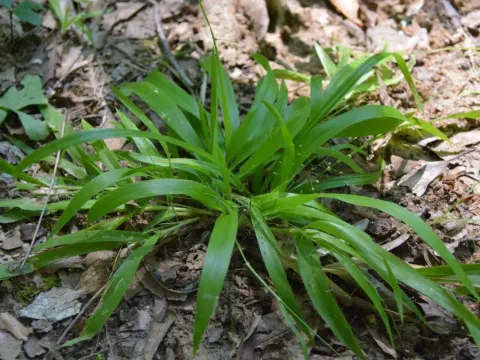
Lax-flowered panicgrass
Panicum laxiflorum
Lax-flowered panicgrass (Panicum laxiflorum) belongs to the Poaceae family. As a warm-season grass, it requires well-warmed soil to initiate germination, usually in late spring.
What the section contains
Lax-flowered panicgrass
Optimal sowing occurs when soil temperatures consistently reach 12–15 degrees Celsius, ensuring that the seeds do not sit in cold, wet soil where they could rot.
The seeds should be planted at a shallow depth of 2–4 cm, depending on the soil texture, with higher depths allowed only in light, sandy conditions.
Using precision seed drills ensures uniform distribution, which is essential to create a dense stand that can naturally compete with emerging weeds during the early stages.
Rolling the soil after sowing is a critical step to ensure adequate contact between the seed and the soil particles, facilitating efficient moisture absorption.
This species thrives in fertile, well-draining soils with a neutral or slightly acidic pH, being particularly sensitive to waterlogged environments that lead to root distress.
Panicum laxiflorum is heat-loving and requires a long growing season with high cumulative active temperatures to reach its full physiological potential.
While exhibiting moderate drought resistance, the crop responds positively to irrigation, especially during the boot and flowering stages when biomass accumulation is most rapid.
Nitrogen fertilization is essential for high-yield forage production, as it encourages dense tillering and increases the crude protein content of the foliage.
Proper soil aeration and organic matter incorporation help maintain the structural integrity of the soil, promoting healthy root expansion and nutrient uptake.
Forage yield can range between 15 and 25 metric tons per hectare under optimal management, making it a reliable source of green biomass for livestock feeding.
The crop is highly regenerative, often allowing for multiple cuts per season if soil moisture and nutrient levels are maintained appropriately.
Harvesting for nutritional peak is vital, as the protein concentration decreases rapidly once the plant progresses into the reproductive phase and stems begin to harden.
Grain yields for this species typically fall between 1.5 and 3 tons per hectare, depending on local environmental conditions and the specific management practices utilized.
Maximizing yield requires a proactive approach to soil health and constant monitoring for environmental stressors throughout the duration of the growth cycle.
Smut diseases are the most significant pathological threat to Panicum laxiflorum, often manifesting in the panicles and reducing both seed viability and crop quality.
Fungal leaf rusts can occur during periods of high humidity and moderate temperatures, resulting in the chlorosis and premature senescence of the foliage.
Insect pests, including various species of grass-feeding aphids and leafhoppers, can sap plant energy and serve as vectors for complex viral infections.
Integrated pest management, including crop rotation and the use of resistant varieties, is the most effective strategy to mitigate these biological threats.
Proactive field scouting allows for the early detection of issues, enabling timely intervention with chemical or biological controls before major damage occurs.
Harvesting for forage should be timed at the late boot or early heading stage to balance the total biomass yield with the highest possible nutritional digestibility.
For high-quality hay production, the crop should be mowed and cured in windrows, ensuring even drying while preserving the green color and nutrient integrity.
When harvesting for seed, the operation should begin when the panicles show clear signs of maturity, typically indicated by a change in color to gold or brown.
Combine settings must be adjusted carefully to minimize grain loss during the thrashing process, ensuring a clean sample with minimal dockage or foreign material.
Storage requires that seeds be dried to a moisture content below 14% to prevent self-heating and ensure long-term stability during transport and warehousing.