
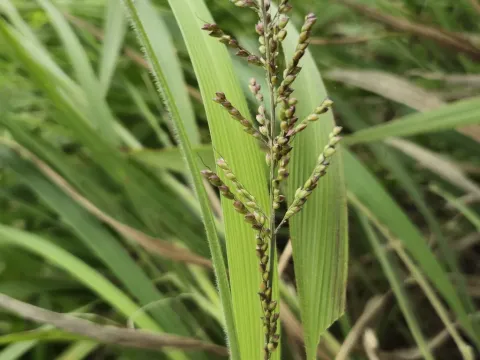
Lindenberg's bristlegrass
Setaria lindenbergiana
Lindenberg's bristlegrass (Setaria lindenbergiana) is a perennial grass species belonging to the Poaceae family. It is recognized for its ability to thrive in demanding environments where other forage crops fail to survive.
What the section contains
Lindenberg's bristlegrass
The species originates from Southern Africa, where it has evolved to cope with high-temperature cycles and unpredictable rainfall, making it an excellent candidate for semi-arid agricultural landscapes.
Regarding soil requirements, this crop favors well-drained loamy to sandy soil types. It demonstrates remarkable adaptability and can tolerate various soil pH levels, although it performs best in neutral to slightly acidic conditions.
Growth requirements include plenty of sunlight and a warm climate. The plant is considered thermophilic, meaning it shows accelerated growth rates during the peak of the summer season when temperatures are consistently high.
The primary agricultural utility of this plant is as a forage resource for livestock. Its ability to maintain structural integrity and nutritional value throughout the growing season provides a stable feed source for grazing animals.
The crop is susceptible to certain fungal infections, particularly rusts, which can reduce the quality of the biomass if conditions remain humid for extended periods during the growing cycle.
Pest populations, including aphids and various grass-feeding larvae, pose a threat to the plant's succulent tissues, potentially impacting overall forage yields if not managed properly.
To maintain plant health, it is essential to implement an integrated pest management strategy that emphasizes crop rotation and regular monitoring of plant density.
Soil compaction can negatively affect the deep root system of the bristlegrass, leading to stunted growth and increased vulnerability to environmental stressors.
Proper harvest timing is crucial to avoid the spread of potential pathogens that flourish on mature, senescing plant tissues left on the field for too long.