
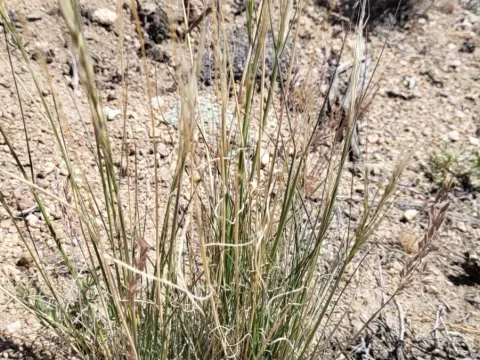
Thurber's needlegrass
Stipa thurberiana
Thurber's needlegrass (Stipa thurberiana) is a perennial bunchgrass belonging to the Poaceae family. It is native to the western regions of North America, where it thrives in arid steppe environments and semi-desert conditions.
What the section contains
Thurber's needlegrass
The plant is highly drought-tolerant, allowing it to flourish in areas with limited precipitation. It prefers well-drained soil types, particularly sandy loams or rocky soils that have a low nutrient density and neutral pH levels.
Sunlight is a crucial requirement for the healthy development of this grass, as it does not tolerate shading. Due to its dense bunching habit, Thurber's needlegrass is exceptionally effective at stabilizing soil and preventing wind and water erosion on hillsides.
Botanically, the plant is characterized by its stiff leaves and distinctive inflorescences that appear during the growing season. Its deep, fibrous root system allows it to access groundwater, ensuring survival during intense summer heat.
In agricultural contexts, this species is utilized as a component in rangeland restoration projects and grazing management programs. It provides moderate forage quality during its early vegetative stages before the plant tissue becomes too coarse.
Common plant pathogens affecting Thurber's needlegrass include rust and powdery mildew, which are often exacerbated by poor air circulation or high humidity levels. Management involves ensuring proper spacing during sowing.
Insect pests, particularly grasshoppers, can cause significant damage to the foliage and seed heads if populations are not controlled. Root-feeding grubs also pose a risk to the plant's stability during its establishment phase.
Overgrazing is the primary non-biological threat, as it destroys the delicate bunching structure and leads to severe soil exposure. This loss of cover encourages the encroachment of invasive weeds that outcompete the grass.
Competition from non-native invasive species is a frequent challenge in both wild and cultivated settings. Regular monitoring and targeted weed control measures are necessary to maintain the integrity of the stand.
Root rot diseases may develop in waterlogged soil, making site selection critical for cultivation success. Maintaining optimal soil moisture levels and avoiding compaction helps keep the grass healthy and productive.