
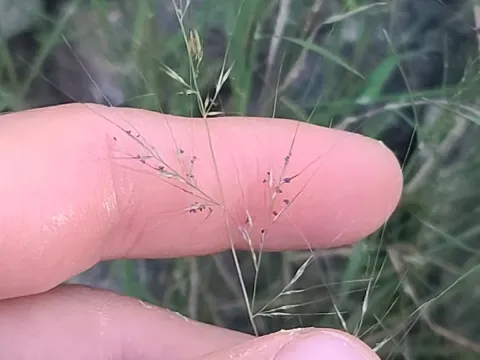
Tumble windmill grass
Schedonnardus
Tumble windmill grass (Schedonnardus paniculatus) is a native perennial bunchgrass that typically establishes itself through seed distribution during early spring.
What the section contains
Tumble windmill grass
Successful sowing requires shallow planting depths, as the small seeds struggle to germinate if buried deep within the soil profile.
Providing adequate soil contact through light harrowing or rolling after seeding is essential to facilitate moisture absorption and germination.
The establishment period is relatively slow, and it is crucial to minimize competition from fast-growing weeds during the first few months of growth.
In natural settings, the plant disperses its seeds through the tumbleweed mechanism, where the entire inflorescence breaks off and is carried by the wind.
As a member of the Poaceae family, this species thrives in dry, open environments and is exceptionally well-adapted to erratic precipitation patterns.
It prefers full sun exposure and generally fails to survive in shaded areas, making it unsuitable for intercropping with dense vegetation.
The plant is highly tolerant of drought and can persist in soil conditions that are too poor or arid for more demanding forage species.
Soil drainage is a critical requirement, as the root system is sensitive to waterlogging and poor aeration typical of heavy, clay-rich substrates.
It exhibits strong winter hardiness and can remain dormant throughout cold periods, resuming growth once spring temperatures consistently rise.
This grass species is remarkably resilient and rarely faces significant economic losses due to major plant diseases or fungal pathogens.
Insects, particularly grasshoppers, are the most frequent threat, capable of causing localized damage to the vegetative foliage during peak summer months.
While the plant is hardy, overgrazing can lead to the depletion of root reserves, making the stand more vulnerable to secondary pest infestations.
Competition from invasive plant species is the primary threat to the longevity of a stand, as Schedonnardus is a relatively weak competitor during early growth.
Soil compaction can indirectly harm the grass by limiting root penetration and access to deep-seated moisture during severe drought events.
Forage value peaks during the vegetative phase; therefore, harvesting should be performed before the plant reaches the boot or heading stages.
Rotational grazing is the recommended method for utilization, ensuring that the plant has enough time to recover its photosynthetic canopy.
Harvesting for hay is possible but requires careful timing to avoid excessive stem lignification, which significantly reduces the palatability for livestock.
Seed harvesting should be targeted when the tumble-like inflorescences are fully mature and turn a straw-yellow color, preventing premature shedding.
Post-harvest management involves leaving sufficient stubble to protect the crown of the plant, which is vital for its survival through the winter.