
Tussock grass
Poa flabellata
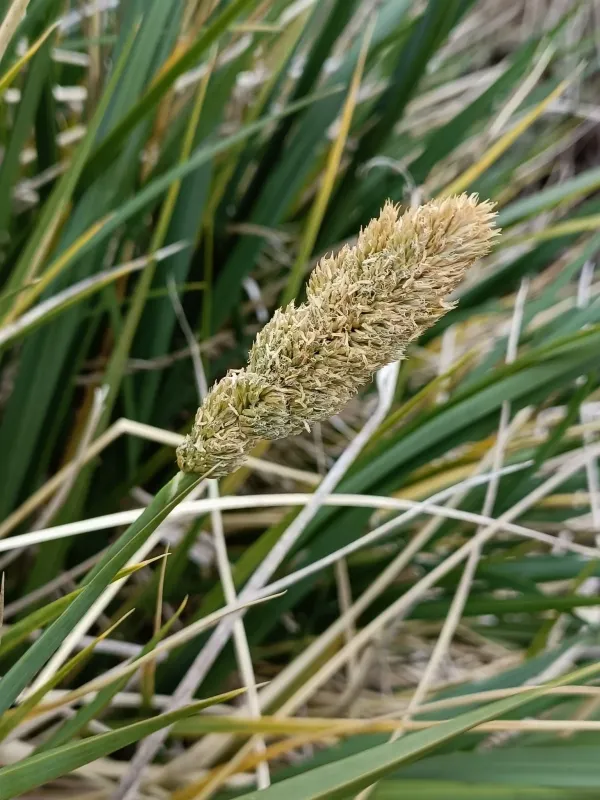
Description
Growing requirements
Tussock grass (Poa flabellata) is a distinctive perennial member of the Poaceae family. It is renowned for its ability to form large, dense mounds, which can reach heights of over one meter in favorable environmental conditions.
The native distribution of this species is centered in the sub-Antarctic regions, including the Falkland Islands, South Georgia, and parts of Tierra del Fuego. It is exceptionally well-adapted to extreme, high-latitude climates.
The species thrives in cool, moist environments and is highly tolerant of saline soils and oceanic spray. It frequently dominates coastal vegetation belts where persistent winds prevent the growth of taller, less resilient shrubs.
Botanically, it features tough, fibrous leaves that fan out from the central base. The root system is extremely robust, providing soil stability and nutrient uptake in cold, acidic peat-based substrates.
Climate requirements include a stable, cool temperature regime without severe summer heat stress. It is not considered an invasive species, but rather a vital ecological keystone in its natural habitats.
Yield
The agricultural value of Poa flabellata primarily lies in its capacity to serve as a reliable forage source for grazing livestock, particularly sheep, in harsh southern climates where temperate grasses fail.
The biomass production is consistent throughout the growing season, providing essential fodder when other vegetation is dormant due to low temperatures or high salinity impacts on soil fertility.
From an land-use perspective, the grass is highly valued for its soil-binding properties, as the dense root mats effectively prevent erosion along coastal regions and reclaimed wetlands.
Managing the species involves controlled grazing strategies to ensure the central crown of the tussock is not over-grazed, which would otherwise lead to the gradual degradation of the plant colony.
While not a major commercial cereal crop, its role in localized sustainable agricultural systems highlights its importance as an underutilized genetic resource for saline-tolerant forage development.