
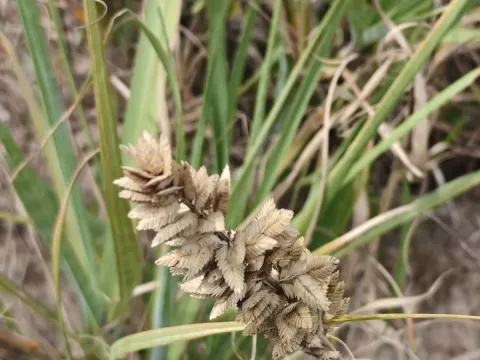
Uniola
Uniola L.
Uniola (Uniola L.) is a genus of perennial plants within the grass family Poaceae. Native primarily to the Americas, these plants are most commonly found in coastal environments, particularly on sand dunes where they act as primary colonizers.
What the section contains

Uniola
The most well-known species, Uniola paniculata, is widely recognized for its ability to stabilize shifting sands. Its extensive root system creates a structural network that holds dunes together, providing essential protection against wind and water erosion.
Regarding soil requirements, Uniola thrives in nutrient-poor, sandy soils with excellent drainage. It is highly adapted to saline environments, capable of withstanding salt spray and high concentrations of minerals that would inhibit the growth of common agricultural crops.
Climate preferences include warm, sunny regions with mild winters. While the plants are hardy, they require full sun exposure to maintain their growth rate and to produce the characteristic large, drooping inflorescences that are highly valued in horticultural use.
In terms of economic usage, Uniola is primarily utilized for land conservation and ornamental landscaping. It is not considered an agricultural food crop, as its vegetative tissues are fibrous and offer little nutritional value for domestic livestock.
Uniola plants can be susceptible to fungal diseases such as leaf rust, especially in areas with poor air circulation or excessive ambient humidity. Proper spacing between individual plants is crucial to maintain dry foliage and reduce disease pressure.
Pests that occasionally impact the genus include various species of aphids and spider mites, particularly during periods of environmental stress. These insects can cause leaf chlorosis and decrease the aesthetic appeal of the ornamental grasses.
Root system issues can arise from soil pathogens if drainage is compromised. Overwatering or planting in heavy, clay-based soils often leads to root rot, which is a major threat to the long-term survival of this drought-tolerant genus.
Mechanical damage from foot traffic in public areas can weaken the plants and increase their susceptibility to infections. Protecting the planting zones with barriers is recommended in parks or areas with high public activity.
Finally, competition from invasive weed species can suppress the growth of Uniola. Regular weeding during the early stages of establishment is necessary to ensure the plants can develop the root network required for their survival.