
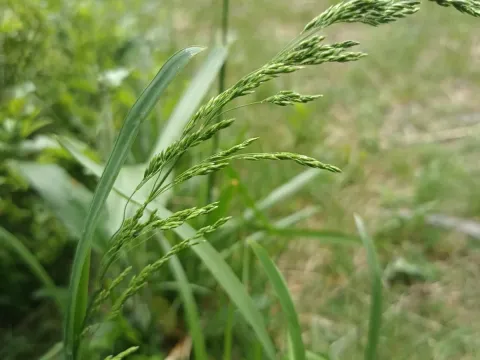
Chaix's bluegrass
Poa chaixii
Chaix's bluegrass is a perennial rhizomatous grass, best established during early spring or late summer. Spring sowing is ideal as it allows the root system to develop sufficiently before the onset of summer drought, ensuring a robust stand.
What the section contains
Chaix's bluegrass
If sowing in late summer, timing is crucial to ensure that seedlings reach the rosette stage before the first heavy frosts. This hardening process is essential for the plant to survive the winter in harsher climates.
The standard seeding rate for pure stands is approximately 10–15 kg per hectare. This density is calculated to ensure adequate ground cover while preventing overcrowding, which could lead to increased humidity within the canopy.
Seedbed preparation must focus on creating a fine, firm tilth. Since the seeds are quite small, they should be sown at a depth of 1–2 cm to ensure they have enough energy to emerge from the soil surface successfully.
Rolling the field immediately after sowing is highly recommended. This practice improves seed-to-soil contact, enhances moisture absorption via capillary action, and significantly increases the overall success rate of germination.
Chaix's bluegrass is well-adapted to cool, humid environments typical of mountainous and woodland regions. It is highly valued for its shade tolerance, making it an excellent candidate for managed pastures beneath light forest canopies.
The crop thrives in fertile, loamy soils that maintain moisture. It does not perform well in excessively dry or compacted soils, so adequate soil management and drainage are vital for maximizing its productive potential.
This species is exceptionally winter-hardy, as its natural evolution occurred in subalpine regions. It can remain green and productive even when temperatures are relatively low, providing extended forage availability.
In terms of nutrition, the plant shows a strong positive response to nitrogen fertilization. Regular application of nutrients in the early part of the growing season encourages vigorous regrowth after grazing or mechanical harvesting.
The plant's natural habitat includes forest clearings and moist meadows, which dictates its preference for well-drained but consistently moist conditions. It is an excellent choice for maintaining permanent pasture in suitable climatic zones.
Like many cool-season grasses, Chaix's bluegrass can be susceptible to rust and powdery mildew when humidity levels remain high for extended periods. Proper canopy management through grazing or cutting helps improve airflow.
Root rot is a potential risk in areas with poor drainage or persistent waterlogging. Selecting sites with natural slope or installing tile drainage can significantly mitigate these risks and support plant health.
Cereal flies and aphids are the primary pests that can impact growth. They typically target young shoots during the tillering phase, which can stunt development if infestation levels are left unmanaged.
Soil-dwelling larvae, such as wireworms, can occasionally damage the root system of established plants. Monitoring pest populations allows for early intervention, often using cultural controls to maintain the integrity of the stand.
Maintaining a healthy, vigorously growing stand is the best line of defense against both diseases and pests. A dense crop canopy effectively suppresses weeds and creates a microclimate that is less favorable to many fungal pathogens.