
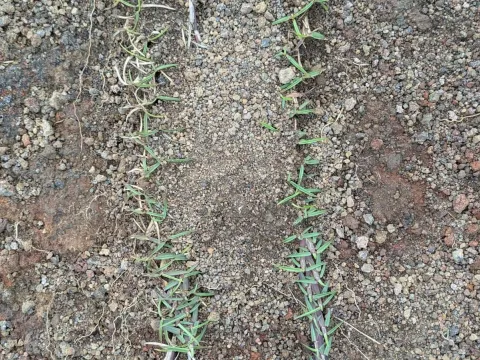
Centipede grass
Eremochloa
Centipede grass (Eremochloa ophiuroides) is a popular perennial warm-season grass belonging to the Poaceae family. Originating from Southeast Asia, it is widely valued for its low-growing habit and ability to form a dense, attractive mat, which reduces the need for frequent mowing compared to other turfgrass varieties.
What the section contains

Centipede grass
This grass species is particularly well-adapted to the warm and humid climates of the Southern United States and similar regions globally. It spreads primarily through stolons, which are surface runners that root at the nodes. This aggressive horizontal growth allows it to crowd out most weeds naturally, maintaining a healthy lawn appearance.
In terms of soil requirements, centipede grass prefers acidic, sandy soils with low fertility. Unlike many other lawn grasses, it does not require heavy fertilization. In fact, over-fertilization can often lead to decline, as the grass is highly sensitive to excessive nitrogen and high pH levels, which can cause severe chlorosis.
Water management is critical for the long-term success of an Eremochloa lawn. While it has moderate drought tolerance, it requires consistent moisture during periods of extreme heat to maintain its signature light-green color. Proper irrigation timing, preferably in the morning, helps to minimize the risk of fungal outbreaks.
The cultural maintenance of centipede grass is relatively simple. It performs best in full sun but can tolerate partial shade. Mowing height should be kept between 1 to 2 inches (2.5 to 5 cm) to promote a uniform density and prevent the accumulation of excessive thatch, which can choke the root system over time.
The most common disease affecting centipede grass is large patch, a fungal condition caused by Rhizoctonia solani. This disease typically appears in the spring or autumn during periods of cool, wet weather, manifesting as circular patches of yellowing or dead grass that can expand rapidly.
Pests such as ground pearls (a type of scale insect) and mole crickets pose significant threats to the root system. These pests are notoriously difficult to control because they live beneath the surface, often causing yellowing and dieback that is frequently misdiagnosed as nutrient deficiency or drought stress.
Prevention of these threats relies on rigorous cultural practices. Maintaining proper drainage and avoiding excessive nitrogen applications are key strategies to minimize fungal susceptibility. Regularly monitoring for pest activity during the warmer months can prevent localized infestations from becoming widespread lawn failures.
When chemical intervention is necessary, it is essential to use products specifically labeled for use on Eremochloa. Many general-purpose herbicides and pesticides can cause phytotoxicity to this specific grass, leading to permanent damage or thinning of the turf.
Overall, centipede grass is considered a "lazy man’s grass" due to its low requirements for input. By focusing on soil pH balance and avoiding over-watering, most growers can maintain a healthy, pest-resistant lawn for many years without significant chemical treatment.