
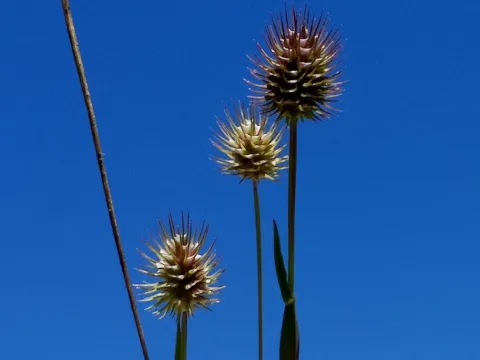
Echinatum timothy
Phleum echinatum
Echinatum timothy (Latin: Phleum echinatum) is a perennial grass species belonging to the Poaceae family. This hardy plant is valued in agricultural systems for its robust nature and ability to serve as a high-quality component in both hay fields and grazing pastures.
What the section contains
Echinatum timothy
The optimal time for sowing is during the early spring or late summer months, allowing the seeds to establish themselves before extreme weather conditions arrive. Ensuring the soil temperature is sufficient for germination is a key factor for successful field establishment.
Due to the small size of the seeds, they should be sown at a shallow depth of approximately 1 to 2 centimeters. Proper soil contact and firming the seedbed are essential practices to ensure uniform emergence and to minimize the risk of soil crusting affecting the young seedlings.
Seeding rates typically vary from 8 to 12 kilograms per hectare depending on the method of cultivation and whether the grass is sown in a monoculture or as part of a complex forage mixture. Adjustments should be made based on local environmental factors and desired stand density.
Effective stand establishment relies on weed suppression during the early weeks. Keeping the field free from aggressive weeds allows the timothy seedlings to develop their root systems without excessive competition for nutrients, sunlight, and soil moisture.
This grass species thrives in temperate climates where moisture availability is reliable throughout the growing season. While it exhibits some tolerance to periods of short-term drought, it performs best when supplied with adequate water, which is critical for biomass production.
Regarding soil preferences, it prefers fertile loam soils with a balanced pH profile. While it can handle slightly acidic conditions, productivity is generally higher in well-drained, nutrient-rich soils that support the deep and fibrous root architecture typical of this genus.
Agronomic management includes a structured fertilization plan. The application of nitrogen is particularly beneficial for stimulating leafy growth, whereas phosphorus and potassium play a vital role in winter survival and the long-term vigor of the perennial stand.
Maintaining proper soil aeration is necessary to prevent root-related issues. In areas prone to compaction, periodic light tillage or soil aeration practices can help improve root penetration and nutrient uptake, leading to more resilient and productive pastures.
The culture acts as an excellent soil stabilizer. Its dense root system helps prevent erosion on sloping lands, making it a sustainable choice for land management and environmental restoration projects alongside its primary function as a high-value livestock feed.
Common agricultural challenges for Phleum species include fungal pathogens like rust and various leaf spot diseases. These threats typically arise in high-humidity conditions, which can lead to reduced nutritional quality if not monitored and managed properly throughout the season.
Pests such as cereal flies and certain types of weevils may impact early development. Integrated pest management (IPM) strategies, including crop rotation and monitoring of population thresholds, are recommended to maintain field health without over-reliance on chemical treatments.
Poor drainage can increase the risk of root rot, a significant threat to stand longevity. Ensuring that fields are well-drained and that there is no water stagnation is essential for maintaining a healthy and productive population of echinatum timothy over several years.
Preventative measures, such as the use of high-quality, certified, disease-free seed, form the foundation of a robust protection strategy. Regular field scouting helps farmers identify potential problems early, allowing for targeted intervention if required.
Maintaining plant health through balanced mineral nutrition is the best defense against stressors. A vigorous plant stand is naturally better equipped to resist infection and recover from minor pest damage, ensuring consistent forage quality and yield.
For hay production, harvesting should occur during the heading stage. At this phenological point, the grass provides an ideal balance of fiber, protein, and carbohydrates, making it highly suitable for high-quality ruminant forage that supports livestock performance.
In rotational grazing systems, the stand should be managed to allow for adequate recovery time between grazing cycles. Maintaining a stubble height that protects the growing points is crucial for rapid regrowth and long-term persistence of the grass in the pasture.
When grown for seed, the harvest timing is critical. It should take place when the seeds have reached physiological maturity but before they begin to shatter. Specialized machinery is often used to ensure the delicate seeds are collected with minimal loss during the process.
Post-harvest conditioning, including immediate drying and cleaning, is essential to prevent heating and mold in stored seed. Properly dried seed maintains high viability and germination energy, ensuring success for future planting cycles in the agricultural operation.
With correct management, the stand can remain productive for several years, providing multiple cuts per season. After the effective life of the stand, standard practices like plowing under the sod can contribute valuable organic matter to the soil profile.