
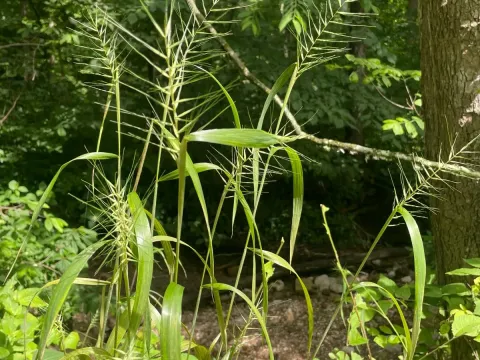
Eastern bottlebrush grass
Elymus hystrix
Eastern bottlebrush grass (Elymus hystrix, formerly Hystrix patula) is a cool-season perennial grass belonging to the Poaceae family. Native to the woodlands of North America, it is widely recognized for its unique, brush-like inflorescences that appear in mid-to-late summer.
What the section contains
Eastern bottlebrush grass
This species is highly valued in agronomy and landscaping for its shade tolerance. Unlike many other forage grasses that require full sun, Elymus hystrix thrives in deciduous forests and shaded meadows, making it an excellent candidate for woodland restoration projects.
In terms of soil requirements, the crop prefers moist, well-drained, and rich organic soils. It is sensitive to waterlogged conditions, which can lead to root rot; therefore, selecting sites with proper drainage is essential for successful establishment and long-term vitality.
Agronomic management involves preparing a firm, weed-free seedbed to ensure good seed-to-soil contact. Since the seeds can have dormancy requirements, fall planting is often recommended to allow for natural cold stratification over the winter months, leading to better germination rates.
Beyond its ecological importance in stabilizing soil on slopes, the grass serves as a structural component in native plant mixtures. While not the primary choice for intensive grazing, it provides palatable forage in forest-pasture silvopasture systems when managed correctly.
The primary threats to Eastern bottlebrush grass are fungal diseases that thrive in cool, humid forest environments. Powdery mildew and various leaf rusts are common pathogens that can affect foliage health, especially in areas with poor air circulation or overcrowding.
Insect pests include aphids and leafhoppers, which can cause stunted growth if infestations reach high levels. In some cases, larvae of cereal-feeding insects may target the vegetative tissues, necessitating monitoring during the early stages of the growing season.
Good cultural practices, such as maintaining proper plant spacing, are the best defense against disease outbreaks. Promoting airflow through the canopy reduces the humidity levels that favor fungal growth, significantly lowering the pressure of common agricultural pathogens.
Chemical intervention should be considered a last resort, utilizing fungicides approved for perennial grasses. Integrated Pest Management (IPM) strategies, including biological control by natural predators of aphids, are highly encouraged to maintain a healthy ecosystem.
Regular monitoring and documentation of field conditions are vital. By identifying pest or disease symptoms early, farmers can take localized actions to prevent spread throughout the entire stand, ensuring the longevity of the perennial crop.