
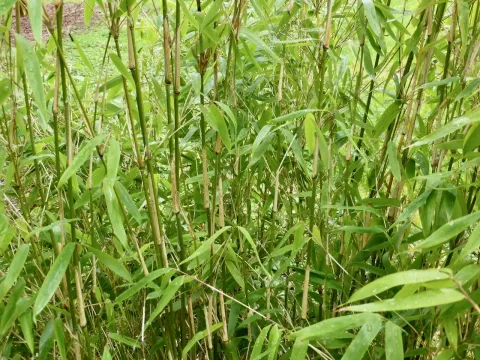
Dwarf bamboo
Pseudosasa humilis
Pseudosasa humilis, commonly known as dwarf bamboo, is a hardy, evergreen perennial belonging to the Poaceae family. This species is highly valued for its low-growing habit, typically reaching heights of 0.5 to 1.5 meters, making it ideal for ground cover.
What the section contains
Dwarf bamboo
Native to Japan, this plant exhibits a vigorous growth pattern characterized by a spreading rhizomatous root system. In agricultural and horticultural contexts, it is primarily used for stabilization of slopes and as an ornamental component in shaded garden areas.
Regarding climate, the species thrives in temperate zones. It is relatively frost-tolerant but performs best when sheltered from freezing, drying winds. It requires well-drained, nutrient-rich soil to reach its full aesthetic potential and structural density.
Watering requirements are moderate; however, the soil should be kept consistently moist. In regions with arid summers, regular irrigation is essential to prevent tip burn on the leaves, which detracts from the plant's overall health and appearance.
Proper management of this bamboo includes the use of root barriers. Since it is a running bamboo, it can quickly invade neighboring areas if not physically contained. Thinning the culms every two to three years helps maintain vigor and allows for better air circulation.
Pseudosasa humilis is generally robust, but it can be susceptible to fungal infections like rust or leaf spot if air circulation is inadequate. Maintaining proper spacing between clumps is the best preventative strategy against these environmental pathogens.
Insect pests, specifically spider mites and scale insects, often target the plant during hot, dry spells. These pests cluster on the undersides of the foliage, leading to discoloration and a decline in the plant's vigor if left untreated for extended periods.
Management of pest outbreaks usually involves the application of insecticidal soaps or systemic horticultural oils. Early detection is critical, as heavy infestations can lead to significant defoliation and weakening of the plant's root system.
Root rot is another potential threat, caused primarily by poor soil drainage. When the soil remains waterlogged for prolonged periods, the root system begins to decay, which is often irreversible. Ensuring good drainage at the time of planting is vital.
To support plant resilience, balanced fertilization should be applied in early spring. This helps the plant recover from dormant winter months and strengthens the new culms against potential stressors throughout the growing season.