
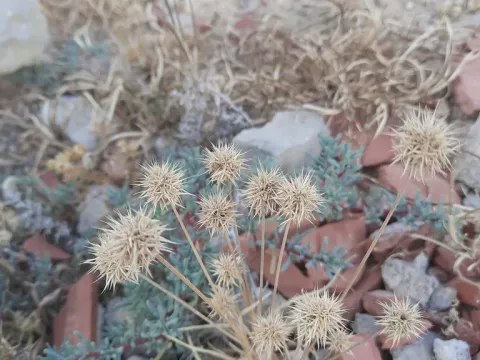
Echinaria
Echinaria
Echinaria is a genus belonging to the Poaceae family, known for its distinct morphological characteristics that allow it to thrive in specific environmental niches.
What the section contains

Echinaria
Sowing typically takes place in early spring, as the soil warms up, ensuring that the seeds have sufficient moisture for uniform germination across the field.
Proper seedbed preparation is essential, as the seeds require shallow placement to ensure that the emergence of seedlings is not hindered by heavy soil crusts.
The drilling method is preferred for sowing, allowing for precise control over seeding depth and spacing, which optimizes the plant population per hectare.
During the initial stages of growth, establishing a good plant density is crucial for suppressing weeds and ensuring a high-quality stand throughout the season.
The culture requires full sun exposure to thrive, as it does not compete well in shaded environments; therefore, choosing the right site is paramount for yield success.
It is remarkably adaptable to diverse soil types, including sandy and rocky soils, showing a high level of resilience to environmental stress factors.
Water requirements for this crop are relatively moderate, as it has evolved in regions where seasonal drought is a common occurrence, making it quite drought-tolerant.
Soil pH should ideally be neutral, but the plant exhibits a degree of flexibility, performing well in a range of conditions from slightly acidic to alkaline soils.
Temperature management is not critical for survival, as the species is adapted to significant diurnal and seasonal temperature fluctuations inherent in its native range.
In agricultural settings, Echinaria is primarily utilized as a component of natural or semi-natural pastures, contributing to the overall forage mass available for livestock.
The yield of green biomass is highly dependent on rainfall distribution, but the crop maintains a stable production even in years with less-than-ideal precipitation.
Nutritional value peaks during the vegetative growth phase; however, once the plant enters the reproductive stage, the presence of stiff awns can impact palatability.
For best results, pasture management should focus on grazing or harvesting before the seeds fully mature, ensuring the highest protein content for animal consumption.
Studies suggest that the genus can be a source of valuable traits for breeding programs, particularly regarding stress resistance and stability in poor environmental conditions.
Rust diseases are among the most common threats to this crop, especially in humid conditions which favor the spread of fungal spores across the field.
Pests like cereal flies and aphids can cause significant damage to young shoots, potentially reducing the overall density and vigor of the crop stand.
Root rot pathogens may emerge if the soil remains waterlogged for extended periods, necessitating careful site selection to ensure proper field drainage.
Preventative measures include regular field scouting and the use of integrated pest management strategies to keep infection levels below the economic threshold.
Maintaining a healthy crop rotation and removing wild host plants from field margins are standard practices to reduce the pressure from common field diseases.
Harvesting for forage should be conducted before the plant reaches the full flowering stage, as this ensures the biomass is soft and nutrient-dense.
Haymaking processes must include efficient drying techniques, such as mechanical conditioning, to preserve the quality of the harvested material during curing.
When harvesting for seed production, timing is critical to avoid losses from shattering, which is a common characteristic of many wild-type grass species.
Direct combining is the preferred method for seed collection, providing that the moisture content is carefully monitored during the harvest window to prevent spoilage.
Post-harvest management involves cleaning the seeds to remove debris and ensuring they are stored in cool, dry conditions to maintain long-term seed viability.