
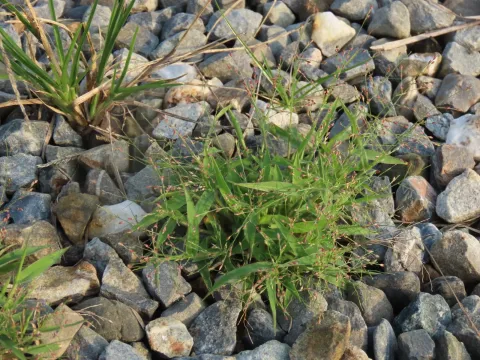
Luzon panicgrass
Panicum luzonense
Luzon panicgrass (Panicum luzonense) is an annual herbaceous plant belonging to the Poaceae family. As a member of the Panicum genus, it is well-regarded for its adaptability to tropical and subtropical climates, particularly in the Southeast Asian region.
What the section contains
Luzon panicgrass
The origin of the species is linked to the Philippines and surrounding islands, where it thrives in humid environments. It is frequently found in open fields, alongside rice paddies, and in disturbed damp grasslands, demonstrating its role as a pioneer species.
Botanically, the plant is characterized by slender, erect culms that grow in tufts. The leaves are generally lanceolate and can exhibit a light pubescence, which is an adaptation to manage water transpiration in warm, humid habitats.
Luzon panicgrass prefers fertile, well-drained loamy soils but shows remarkable tolerance to waterlogged conditions. It requires consistent light and temperature levels to complete its life cycle effectively within the monsoon-influenced agricultural calendar.
In terms of agricultural utility, this grass serves as a significant source of forage. Its ability to produce substantial biomass in diverse soil conditions makes it a valuable species for pasture improvement and soil cover in tropical environments.
Like many wild grasses, Panicum luzonense is susceptible to fungal pathogens, including various forms of rusts and smuts that affect the foliage and the reproductive organs of the plant.
Insect pests, specifically shoot flies and various types of aphids, often target the plant during the early seedling stages, which can severely stunt the overall growth of the crop.
Weed competition is a primary limiting factor during the establishment phase, as the plant may be outcompeted by more aggressive invasive species in nutrient-rich soils.
Stem borers pose a significant threat in certain geographic areas, as they bore into the central culms, causing localized necrosis and eventual lodging of the mature plant stems.
Effective management strategies include crop rotation practices and proper land preparation to ensure that the soil environment does not harbor excessive levels of fungal spores or pest larvae.