
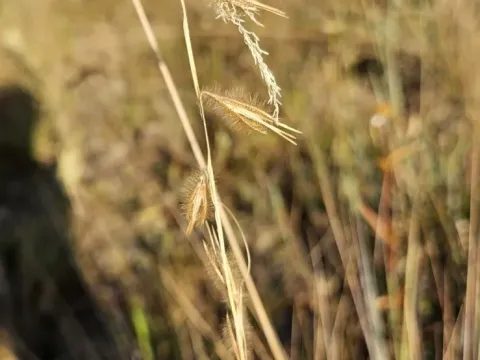
Loudetiopsis
Loudetiopsis
Loudetiopsis is a genus of perennial grasses belonging to the Poaceae family. These plants are primarily native to the tropical and subtropical regions of Africa and South America, where they thrive in savanna landscapes and open grasslands.
What the section contains

Loudetiopsis
The cultivation of this grass requires well-drained soils, often thriving in substrates that are considered nutrient-poor. Its biological adaptation allows it to flourish in environments with high light intensity and intermittent periods of extreme dryness.
Morphologically, Loudetiopsis species form dense tufts that help conserve moisture and protect the topsoil from erosion. The leaves are typically narrow and resistant to dehydration, supporting the plant’s survival in the harsh, sun-exposed habitats of its native range.
Regarding climate, the plant prefers warm conditions with distinct wet seasons. It does not tolerate waterlogging, requiring well-drained soil profiles to avoid root decay. Its resilience makes it an ideal candidate for low-input agricultural systems.
The plant demonstrates significant ecological flexibility, allowing it to adapt to various soil types and environmental pressures. It is an essential component of the natural ecosystem, providing ground cover and stability in areas where more demanding crops might fail.
In agricultural practice, Loudetiopsis is primarily utilized as a forage resource for livestock. It is valued for its regrowth capabilities following moderate grazing, which helps maintain a sustainable food supply for herds in tropical pastoral systems.
To ensure high nutritional quality, harvesting as hay should occur before the plant reaches its full reproductive (flowering) phase. During the vegetative stage, the plant maximizes its protein and mineral content, which is critical for livestock development.
Management of the grass involves careful monitoring of grazing intensity to prevent overgrazing, which can damage the root structures. Rotational grazing is recommended to ensure that the plants have sufficient time to recover between periods of usage.
Mechanical harvesting of the biomass requires sharp machinery to manage the fibrous texture of the stems. Proper drying protocols must be followed to prevent mold growth in the hay, ensuring the quality of stored feed for the dry season.
Overall, Loudetiopsis remains a vital asset for extensive farming in marginal regions. By applying proper agricultural techniques, farmers can sustain productivity while maintaining the longevity of the pastureland.