
Loudetia
Loudetia
Loudetia is a genus of perennial grasses belonging to the Poaceae family, widely distributed across tropical Africa and parts of South America. These plants are quintessential elements of savanna landscapes, known for their resilience in challenging, nutrient-poor environments.
What the section contains


Loudetia
The culture thrives in well-drained, often acidic soils, exhibiting a remarkable ability to survive in areas where mineral availability is low. This adaptability makes Loudetia a subject of interest for land restoration projects aimed at rehabilitating degraded tropical ecosystems.
Climate-wise, Loudetia prefers warm, tropical conditions with distinct dry and wet seasons. It is highly drought-tolerant, utilizing its deep root system to access water during the dry months, which ensures its survival when other grass species may suffer from moisture stress.
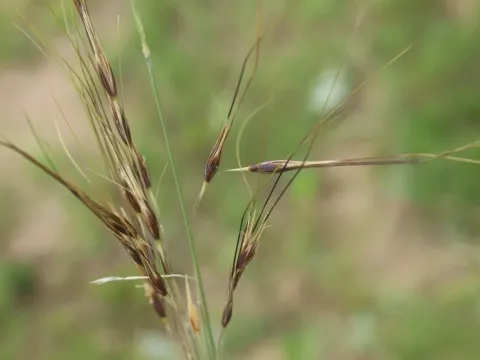
Botanically, the plant is characterized by tufted growth habits and narrow, often stiff leaves. The inflorescences are typically panicles with prominent awns, which facilitate seed dispersal through animals or wind, a common evolutionary strategy for grasses in open savanna regions.
Economically, Loudetia serves as a vital forage source in extensive pastoral systems. While the plants become coarser as they mature, young shoots provide essential nutrients for livestock, making it a critical component of natural grazing lands in its native range.
Loudetia is susceptible to several fungal diseases, particularly rusts, which can significantly impact leaf quality during periods of high humidity. These infections interfere with photosynthesis, thereby reducing the plant's overall biomass and vigor during the growing season.
Insect pests, including various species of grasshoppers and locusts, pose a significant threat, especially in years of high population density. These pests can rapidly defoliate large areas, leading to decreased forage availability for grazing livestock and wild herbivores.
Root-knot nematodes are among the primary soil-borne threats to Loudetia. They infect the root systems in sandy soils, disrupting water uptake and nutrient translocation, which leads to stunted plant growth and increased vulnerability to other environmental stressors.
Preventive management involves ensuring proper grazing rotation to prevent overgrazing, which can weaken the plant's natural defense mechanisms. Maintaining a healthy soil structure through organic enrichment can also help improve the plant's resilience against subterranean pests.
Fire management is an additional consideration for the culture. While many Loudetia species show adaptations to fire, frequent or uncontrolled burning can disrupt the biological balance, potentially favoring the spread of invasive species over the indigenous grass cover.